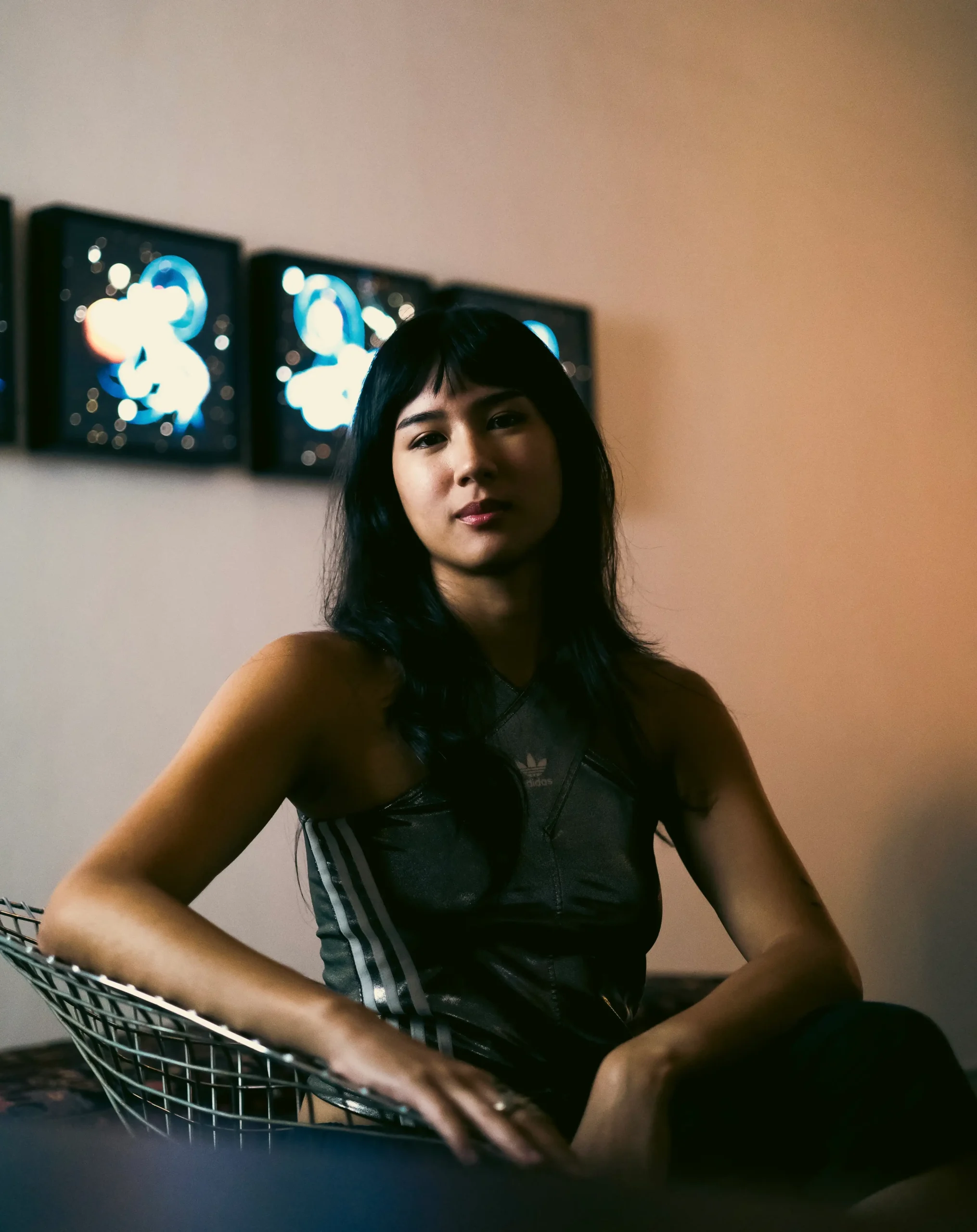
Underwater macro photographer and artist Andie Remulla finds infinite pleasure in the ocean’s infinitesimal creatures.
“O second moon, we, too, are made/of water, of vast and beckoning seas,” writes U.S. Poet Laureate, Ada Limón, in her poem “In Praise of Mystery: A Poem for Europa.” The piece is an ode to one of Jupiter’s moons, Europa, which possesses an expansive subsurface of saltwater ocean. She continues: “We, too, are made of wonders, of great/and ordinary loves, of small invisible worlds,/of a need to call out through the dark.” The “we” here is us: pulsing lifeforms that inhabit this big blue planet called Earth, tiny yet complex miracles of nature that emerged from the water billions of years ago. Even in the deepest reaches, there exist places both alien and familiar, essential despite their distance. Much like how outer space draws in the curious, the ocean’s “small invisible worlds” beckon, calling to people like Andie Remulla.
Lifestyle Asia sits down for a conversation with the underwater macro photographer and artist, whose “blackwater” works explore the ocean’s often-unseen depths.
READ ALSO: Wild Exposure: Gab Mejia On Art, Conservation, And The World Worth Protecting
Andie Remulla Takes The Plunge
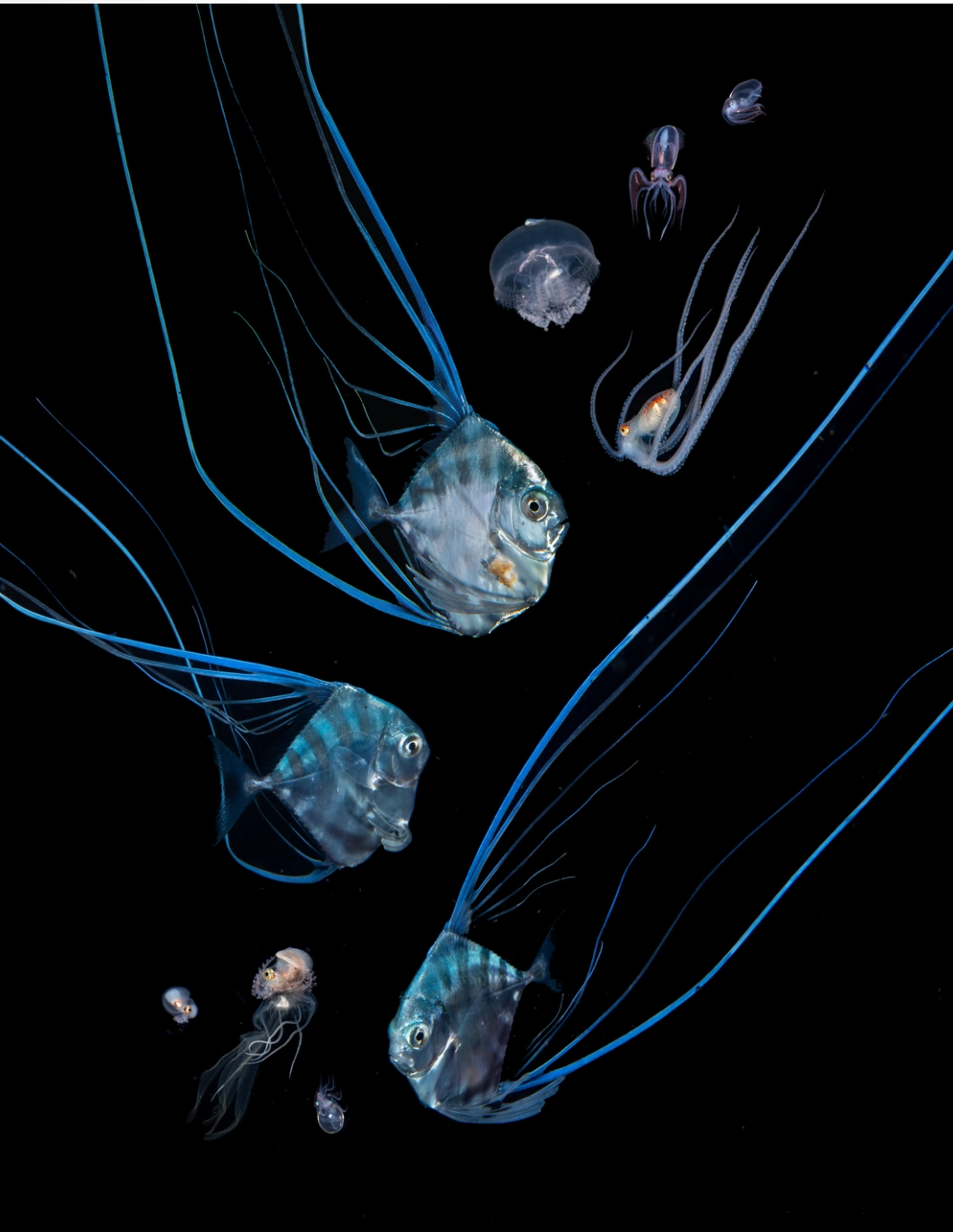
I ask Andie the usual question: how did she find her way into a practice as niche as blackwater photography? Done in the deep ocean at night, it focuses on creatures smaller than “the palm of a hand,” as she describes.
Andie prefaces her journey with a surprising, integral detail: she never grew up with a particular interest in the environment and the outdoors. It was a passion she developed in her early 20s, when her father decided to sign her and her brother up for scuba lessons on a whim.
The first few times she tried scuba diving, Andie thought the experience would induce a panic attack. But, as it turned out, her mind and body were naturally equipped to handle the inky depths with ease. “I never panicked underwater. I think once you get over all the learning humps, you can really focus on the environment,” she explains. “That’s when it really unlocked something for me. I thought, ‘Wow, this is absolutely incredible.’ But I was finding it hard to just describe what I was seeing to people. So I looked into getting a camera.”
That first camera was the Olympus Tough TG-6, a robust piece of equipment built for extreme environments and macro photography. She was then paired with a guide who taught her how to navigate the waters of Anilao in Mabini, Batangas—a top destination for scuba divers and macro photographers from around the world—as well as the basics of underwater photography.
“And I guess he thought I was talented; we really enjoyed shooting with each other,” she shares. “He ended up introducing me to his mentor and boss, who’s now my mentor: Mike Bartick.” This would mark the beginning of a more serious practice, taking Andie further—both in skill and into deeper waters.
Roughly half a decade later, at the age of 26, she’s still committed to blackwater photography. Now working as a full-time artist after leaving corporate, her primary base of operations is still in Anilao. “I think I do want to eventually teach or take people on blackwater trips,” she states.
I ask what makes Anilao special, compared to the other waters she’s explored abroad—namely, those in Mexico and Indonesia. Each has its own charm, with Andie describing Mexico’s waters as incredible. In terms of similarity, Indonesia’s Raja Ampat [an archipelago in Southwest Papua] is closest to Anilao, both known for being among the most biodiverse marine habitats in the world. But the Philippines still has much to improve on when it comes to preserving that richness.
“Anilao is the pinnacle of the coral triangle for marine shorefish biodiversity because of our very healthy and wealthy current,” Andie expounds. “Sadly, our coral cover and fish population isn’t as good as Raja Amat. We share a lot of similar species, but their area is just so much more well-protected and managed versus Anilao, where the LGU isn’t very involved. I guess it’s because they’re not divers, so they don’t really know how to best protect it.”
Despite all this, Anilao remains a treasure trove for macro photographers, its relatively small area possessing a high population of diverse marine life. These creatures’ more elusive natures and less accessible habitats make blackwater photography pieces all the more valuable, the art of documenting in darkness being a tricky one to master.
Documenting In Darkness
Diving is a science. There are things to consider, countless technical factors to ensure you—a human whose body wasn’t built for long periods under such cold, uncontrollable depths—resurface safe and sound. Now, add the element of trying to get the perfect shot with a living creature that moves unpredictably, and you’ve got an activity Andie describes as “a sport, as much as it is an art.” She doesn’t let the nitty-gritty phase her, though, acknowledging that a big part of the practice is accepting risks while learning to mitigate them to the best of your ability.
“It’s not the most conservative kind of diving. There’s a balance between, ‘How hard am I willing to fight to get this shot?’ and ‘How safe am I going to be?’ But as a photographer, you usually think, ‘I just have to go for it,’” she explains. “You just have to be sure you’re able to handle yourself: that your air is okay, that you have enough time underwater, because there are limits to how deep you can go.”
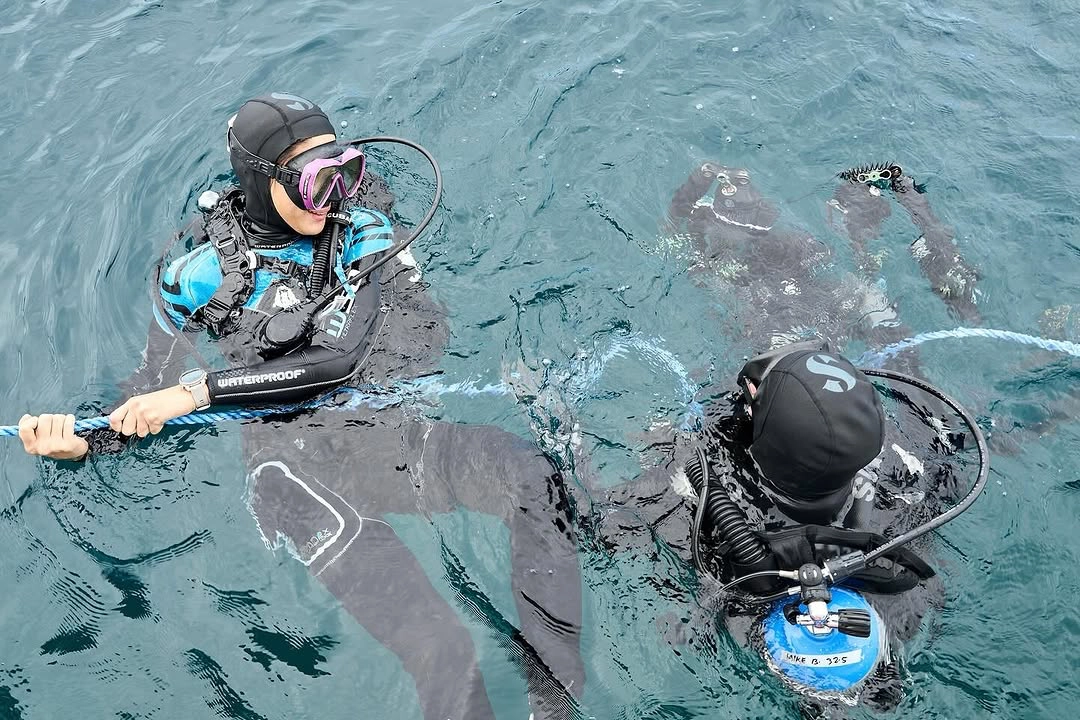
She continues: “I think people who go outdoors have this understanding that if you just approach the situation with respect, and have a very good team around you, then you’ll be okay. I dive with a whole boat crew. We usually have at least one guide with us in the water to make sure we’re safe.”
Buoyancy and precision go hand in hand when Andie takes her shots. Move a little too much, and the water swishes, scaring the creature away. “Sometimes you have to chase them,” she adds.
Other times, these organisms swim up and down—but a diver can’t rise to the surface too fast, either, as it could cause decompression sickness or “the bends” (a life-threatening condition where nitrogen bubbles form in blood and tissue, causing numbness, joint pain, and in deadly cases, neurological damage).
The creatures being very small means a narrower field of depth. “You’re trying to get the creature in frame and in focus. It requires precision. Your control of your gear has to be super dialed in just to get a shot,” Andie elaborates, then laughs, adding, “I don’t really tell people about all this because they get bored or zone out.”
On the contrary, I tell her, the primary emotion I feel isn’t boredom but an awe for just how much this art form demands, and how rewarding it can be.
Nature’s Tiny Works Of Art
Over years of interviews, it’s gotten easier to spot the things that really capture an artist’s mind and heart. Usually, it happens when they start gushing about the seemingly mundane or the hyper-specific (sometimes, they overlap). I think, “This person spent hours on research, on learning, to better understand something out of sheer love. These are the details that matter to them.” That exact moment happens when I ask Andie about her most memorable subjects in the ocean’s depths. “What gets your attention, what are the things you look out for?” I inquire.
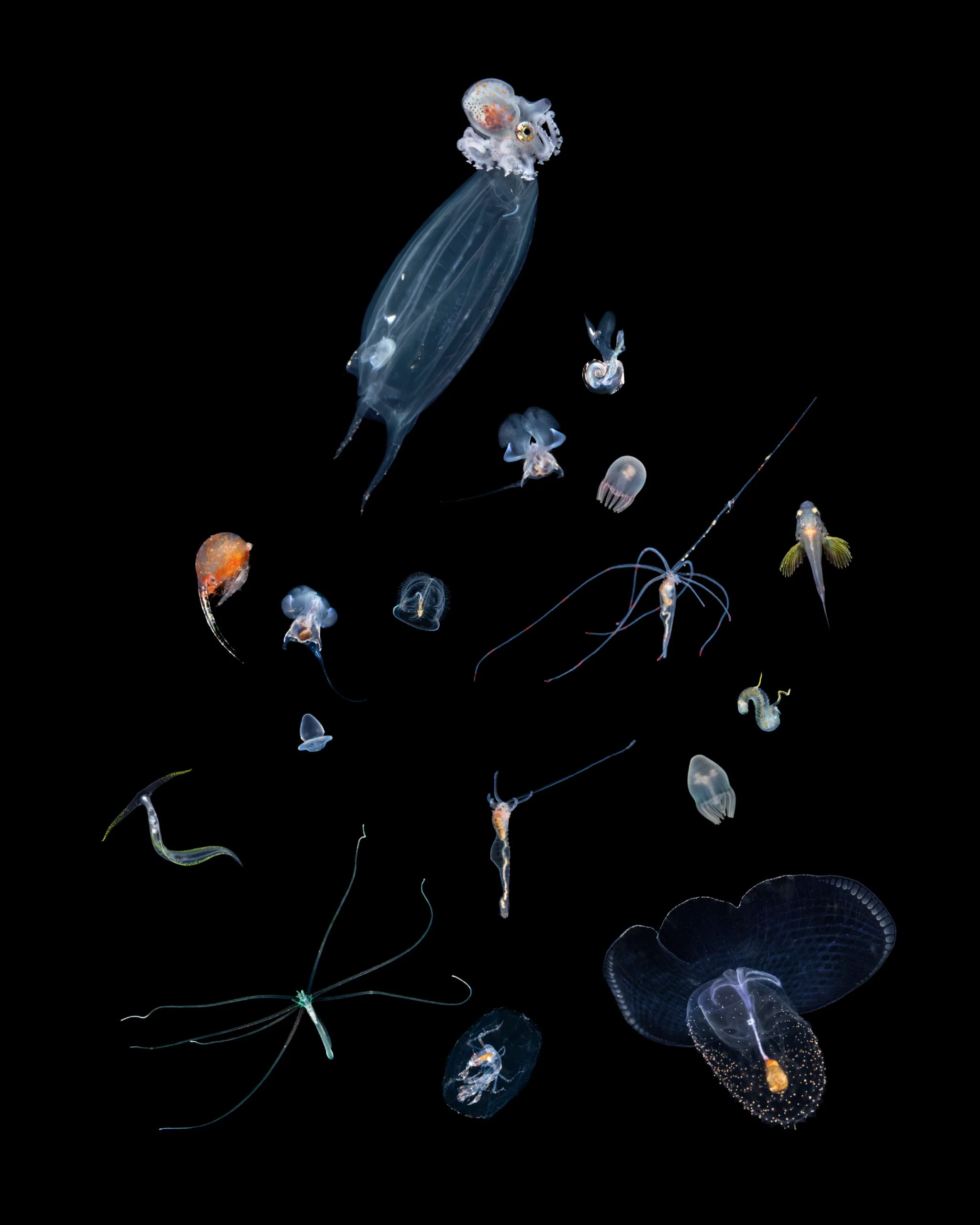
“I have my ‘goal species,’” she answers animatedly. “It’s usually creatures with eyes, or those that, in larval form, are extraordinary: they might have lures, or special parts of their bodies that disappear when they turn into adults.”
Cephalopods like octopi and squids hold a special place in Andie’s heart. “They’re my favorite creatures. I think the most incredible thing I’ve seen is the female blanket octopus [a cephalopod known for its glimmering, flowing web] unfurl her blanket fully underwater, right in front of my face. Those are moments that just make your heart race.”
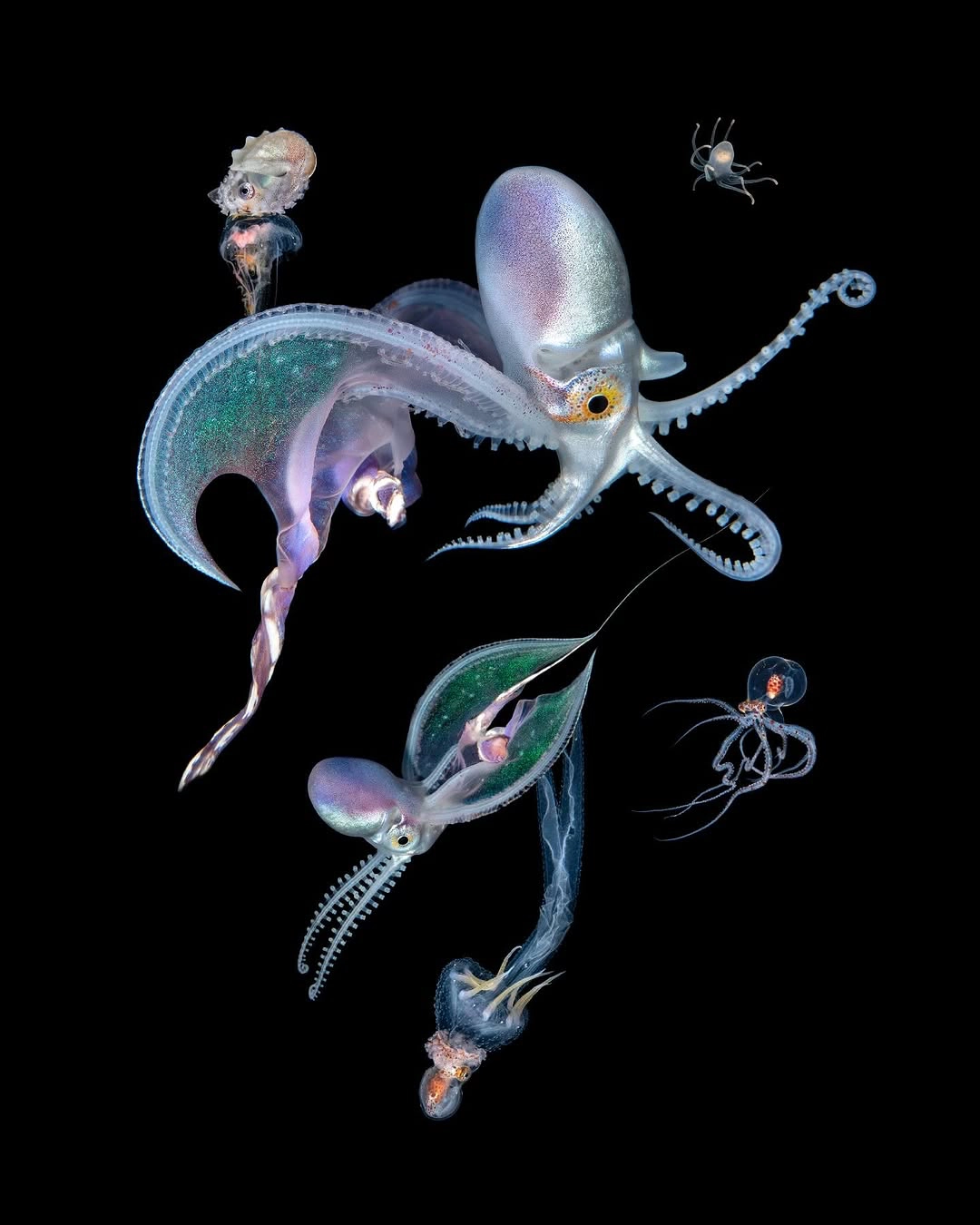
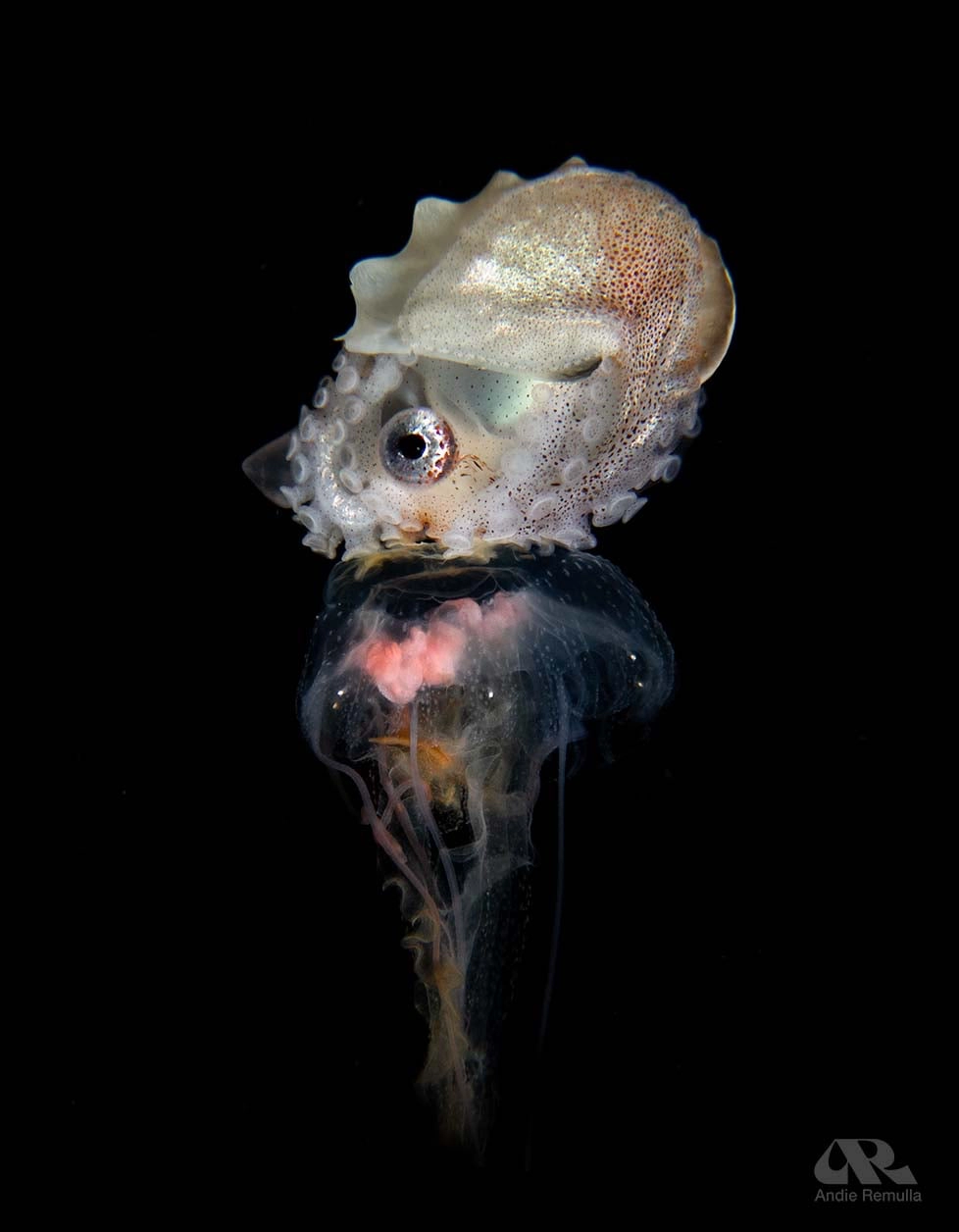
She also mentions the female paper nautilus. “It’s the only octopus in the world that has a shell, and it uses that as a buoyancy control device. It goes up to the surface and puts a little air pocket—you see them bobbling around. They’re absolutely beautiful creatures that have these color-changing cells called ‘chromatophores,’ sparkling from yellow to red.”
Then there’s the jellynose fish, which Andie only recently spotted. “You can pull up a photo to see what it looks like,” she tells me. “It looks really funny, like a muppet.” True enough, a quick search reveals a creature with a comically vacant expression lifted straight out of a toddler’s doodle.
Whether her subjects are silly, majestic, strange, or a little bit of everything, underwater macro photography presents Andie with an opportunity to observe and learn from the world around her. “I always tell people that nature is the greatest artist. I could give endless answers about why the small creatures are fascinating,” she shares. “The number one thing is that they’re absolutely beautiful, and they have all these details you really wouldn’t see with just the naked eye.”
Nocturne And Earth’s Oceanic Emissaries
The parallels between space and the ocean are hard to ignore. Both predate life on Earth, and both are sites of creation that have birthed entire worlds. They’re unfathomably deep, endless in ways that leave much of them unexplored. Neither can be survived without specialized equipment, and to venture too far is to risk your life. Yet, the few that call these realms home—creatures of the murky depths, massive organisms built to withstand crushing pressure, planetary bodies and strange extraterrestrial forms drifting through the void—stand as wondrous creations.
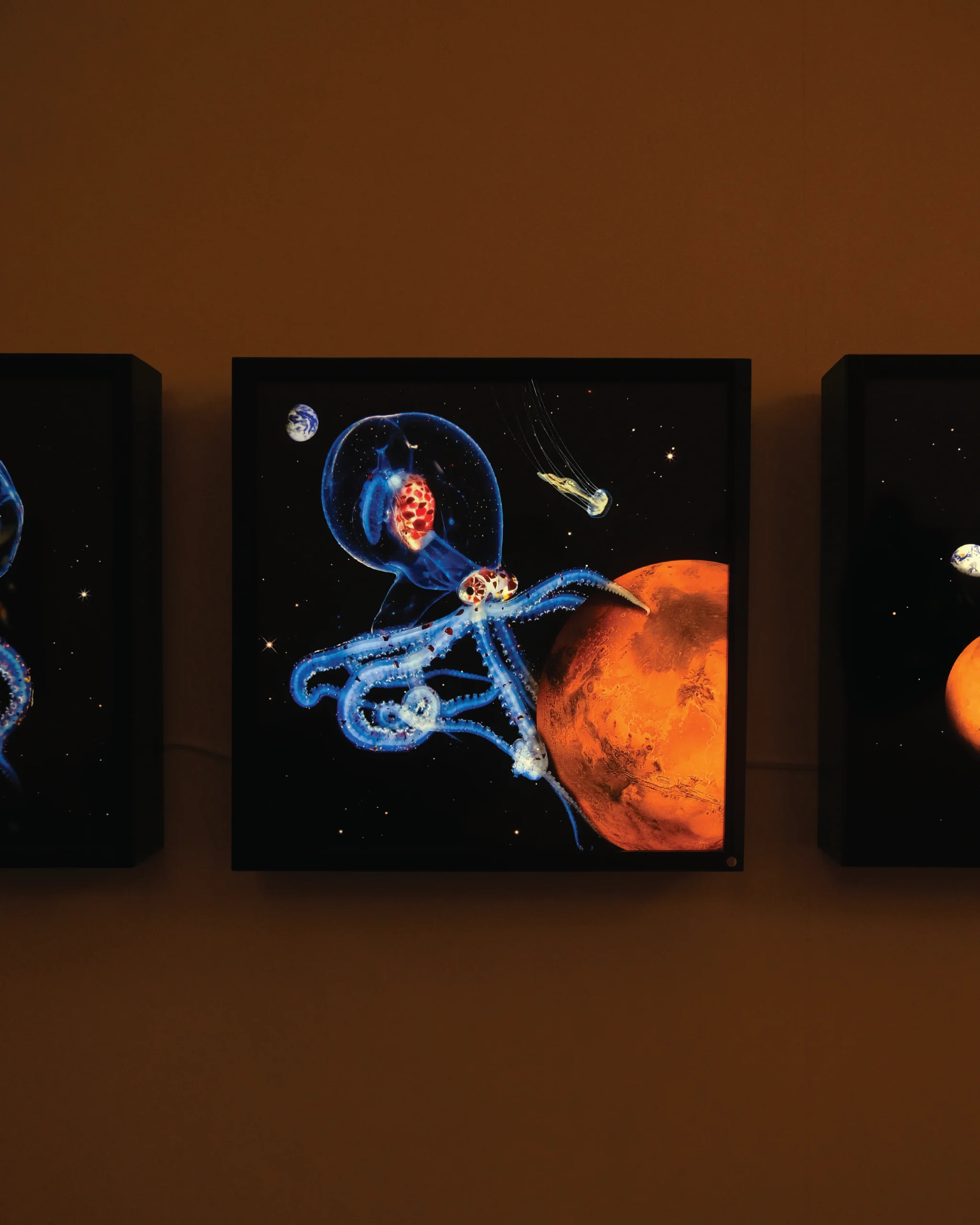
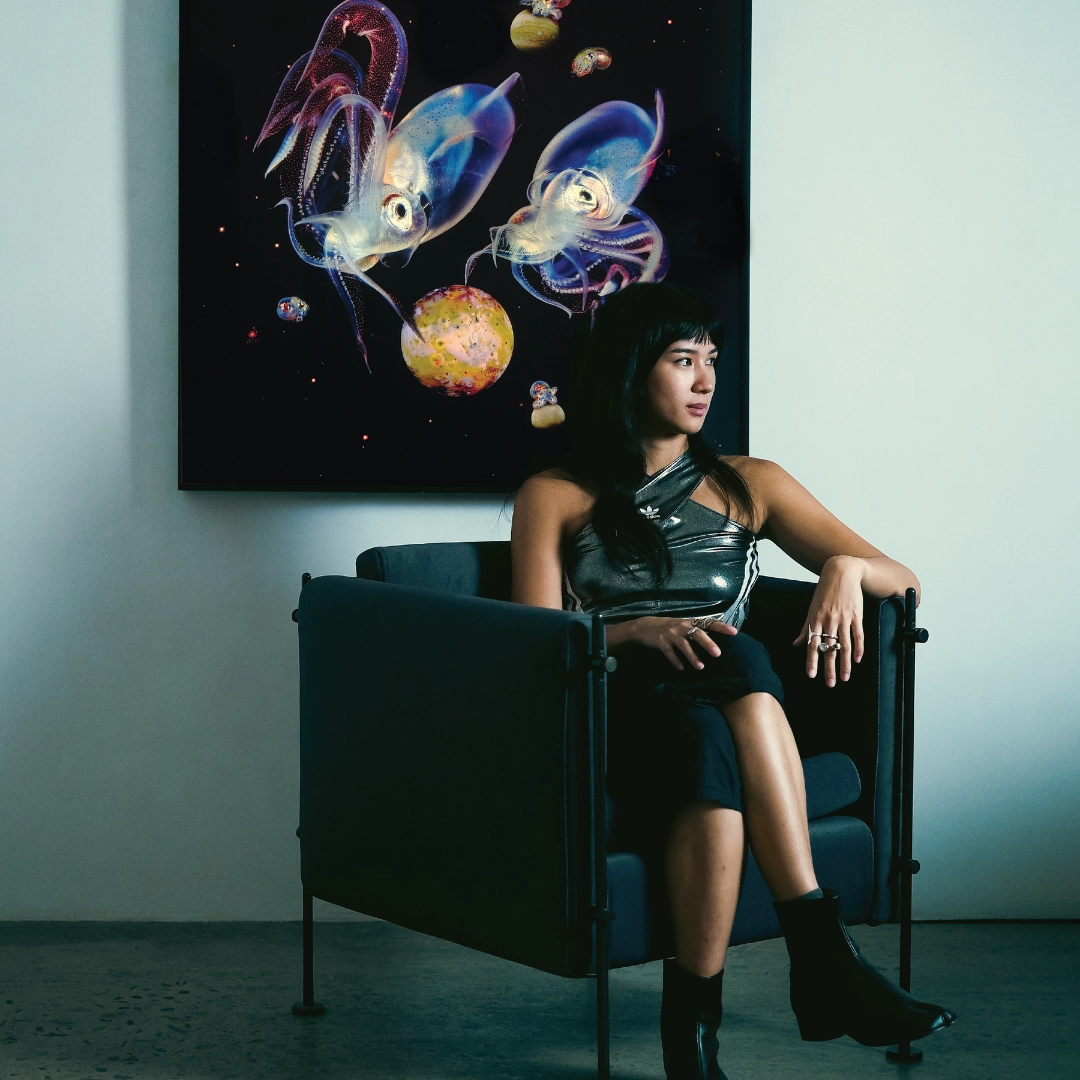
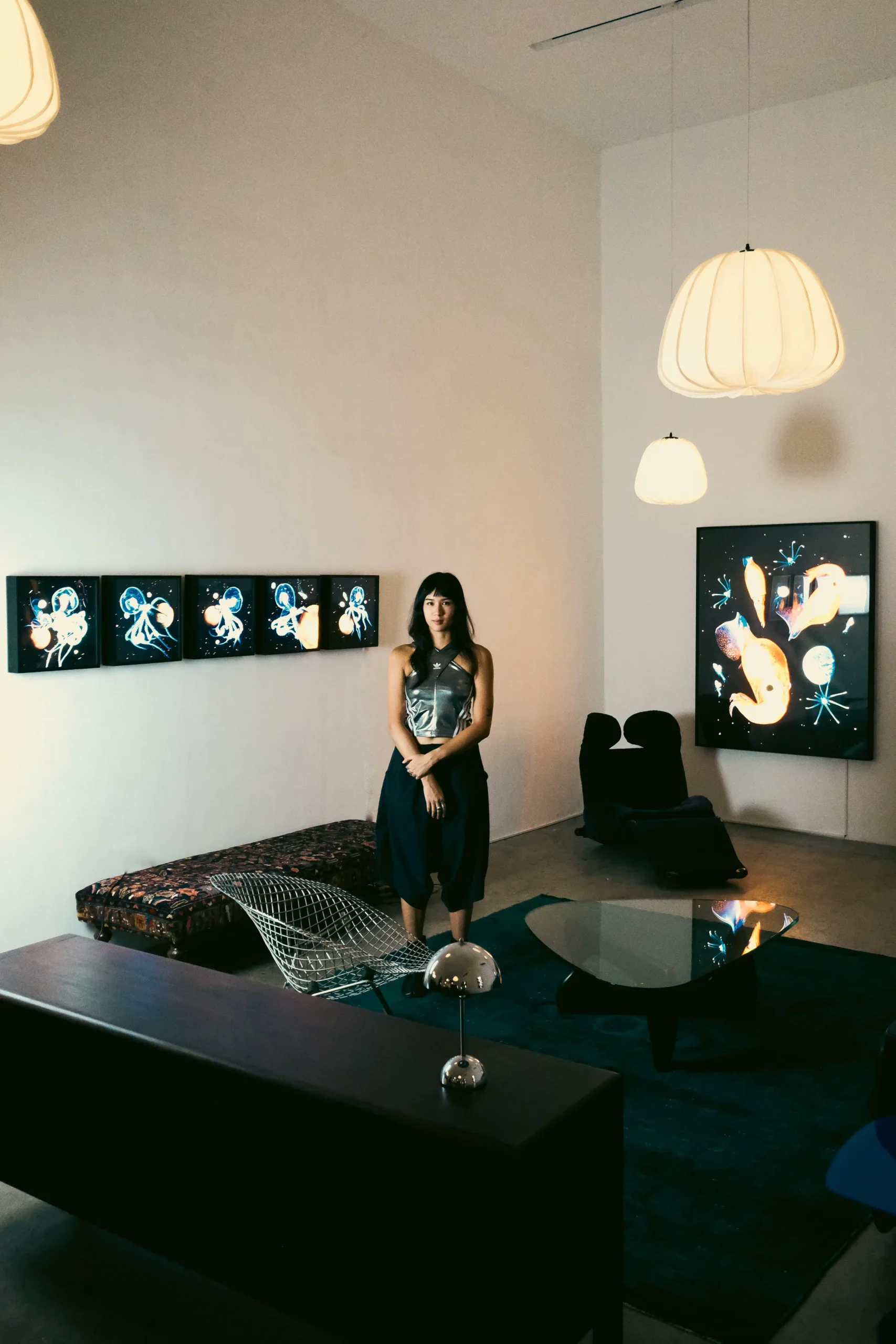
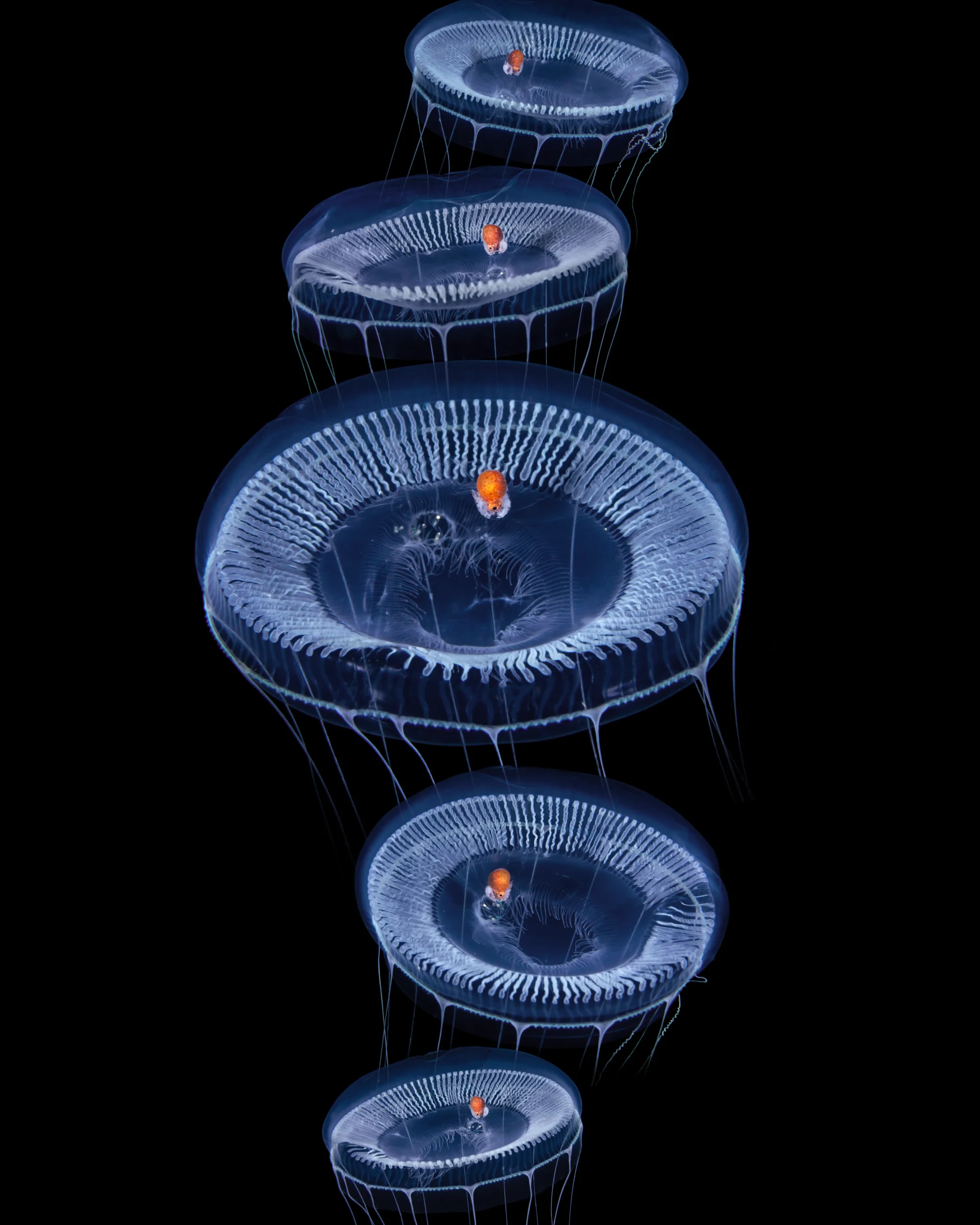
Andie’s first solo exhibition, Nocturne: A Call Through The Dark, explores these parallelisms, placing creatures of the great deep in pitch black backgrounds next to moons, planets, and stars, their colors glowing atop lightboxes that bring out the vividness of nature’s brushstrokes. The assemblage feels seamless, ethereal yet not impossible: celestial cephalopods drifting across the sky as they might in the inky ocean, bioluminescent organisms glimmering like constellations.
“I think Nocturne is really just a distillation of myself and how I feel underwater. The sea creatures are the characters, representatives of Earth exploring the solar system,” she tells me. “I wanted them to have this attitude of optimism, as if they’re about to make the next great discovery—because that’s how I feel when I’m underwater looking for them. It goes through the planets one by one like a journey or storyboard.”
I ask her what her favorite piece is, which I acknowledge, always feels like asking someone if they have a favorite child. “But I do have a favorite child,” the artist replies, chuckling.
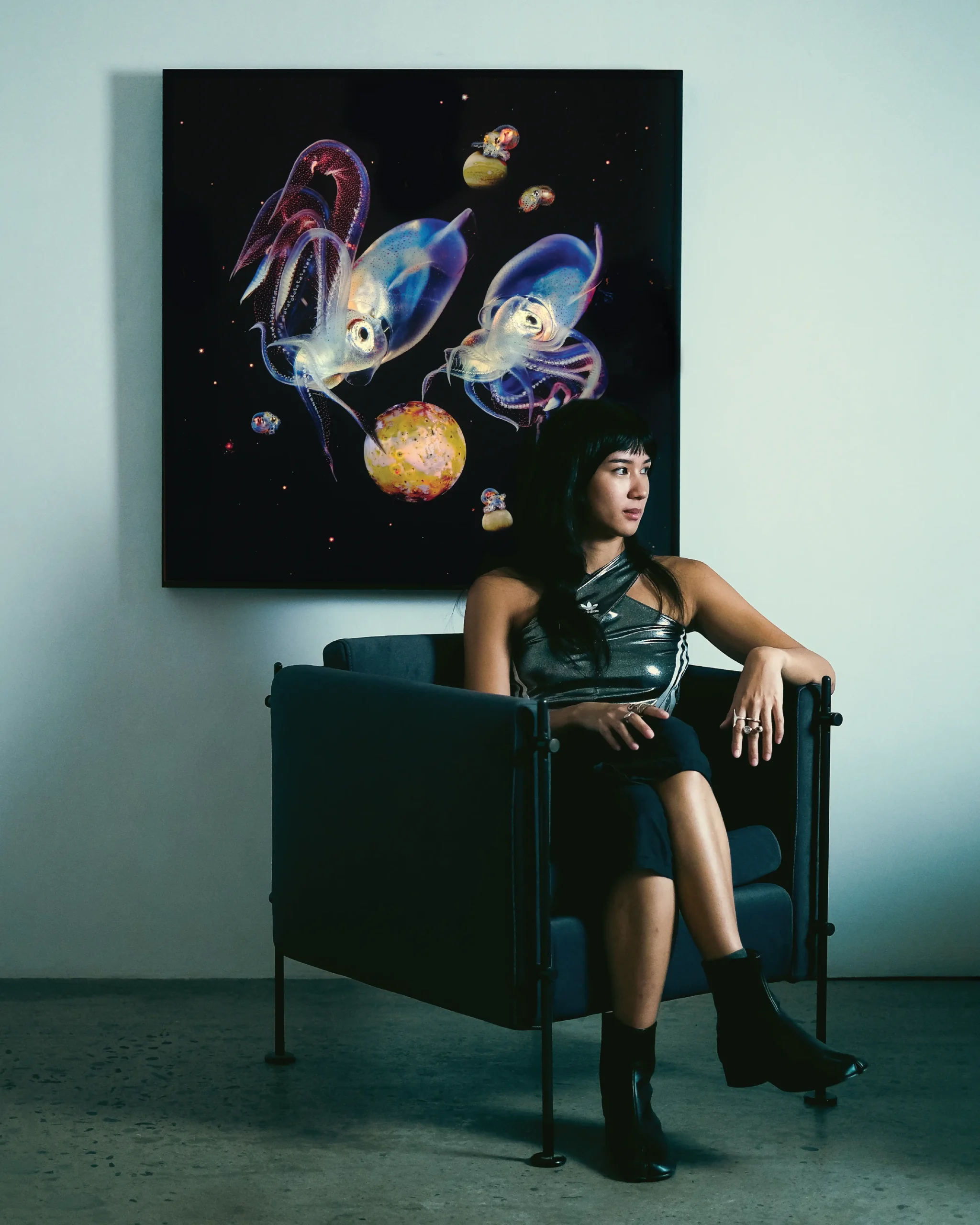
The piece she’s referring to is the eponymous “Nocturne”: two larval diamond squids playing with Io, one of Jupiter’s moons. “You see the attitude I wanted the pieces to have,” Andie explains. “And I think the colors just turned out really beautiful.” There’s another piece she mentions, her second favorite titled “Always Returning”—which, to my mind, is the most poignant and emotionally compelling in the series.
“It depicts these orange squids taking a last look at Earth before they leave. It’s named after a Brian Eno song from his Apollo: Atmospheres and Soundtracks album,” Andie expounds. “I think the artwork has this really sentimental tone because it’s the last time the creatures are encountering the blue planet before they go off into the unknown.”
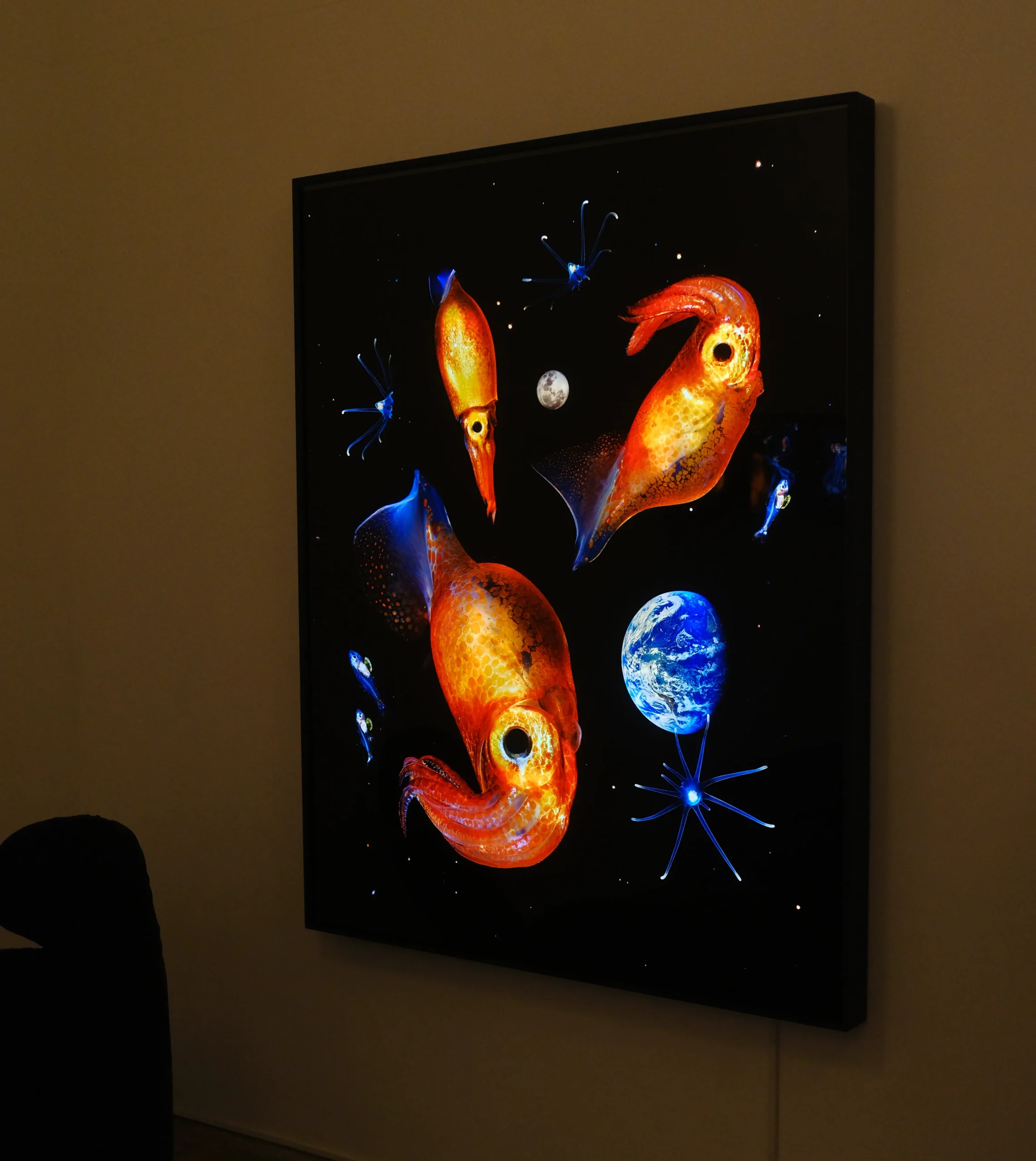
In the gap between home and beyond, what you know and don’t know, is the thrill of life’s many possibilities—and that’s what Andie tries to reach for in her finished pieces and process. “I wanted it [Nocturne] to feel very optimistic rather than scary, because you’re staring out into the void,” she elaborates. “It really is pure darkness; you shine your flashlight down there, and it doesn’t end. I think it’s a concept a lot of people can’t grasp, and they think it’s really terrifying. But for me, it feels absolutely exciting, as if any second now, I could see something incredible.”
Bridging The Distance
Taken together, these pieces do what any great work about our world should: they elicit a sense of wonder. And that wonder is the first step to getting people to remember that the Earth holds breathtaking and intricate systems worth protecting. “I wouldn’t expect any normal person to really go out and dive. It’s hard,” Andie says. “But I think art has the power to make people feel something they’ve never experienced before.”
The two concepts she wants to explore in future works carry this ethos, presenting the small yet consequential ways in which waste permeates our lives and affects marine creatures. Raising that awareness is more than just pointing out floating plastic bottles or cans—it’s showcasing how contaminants break down and seep into every crevice of existence.
The first idea is an expansion on existing pieces that depict sea creatures interacting with waste. “I just want to talk about how these objects we create to be discarded almost immediately are totally recontextualized,” Andie explains. The second concept delves into photo microscopy, the artist planning to obtain water samples and capture the microplastics within them via a powerful microscope.
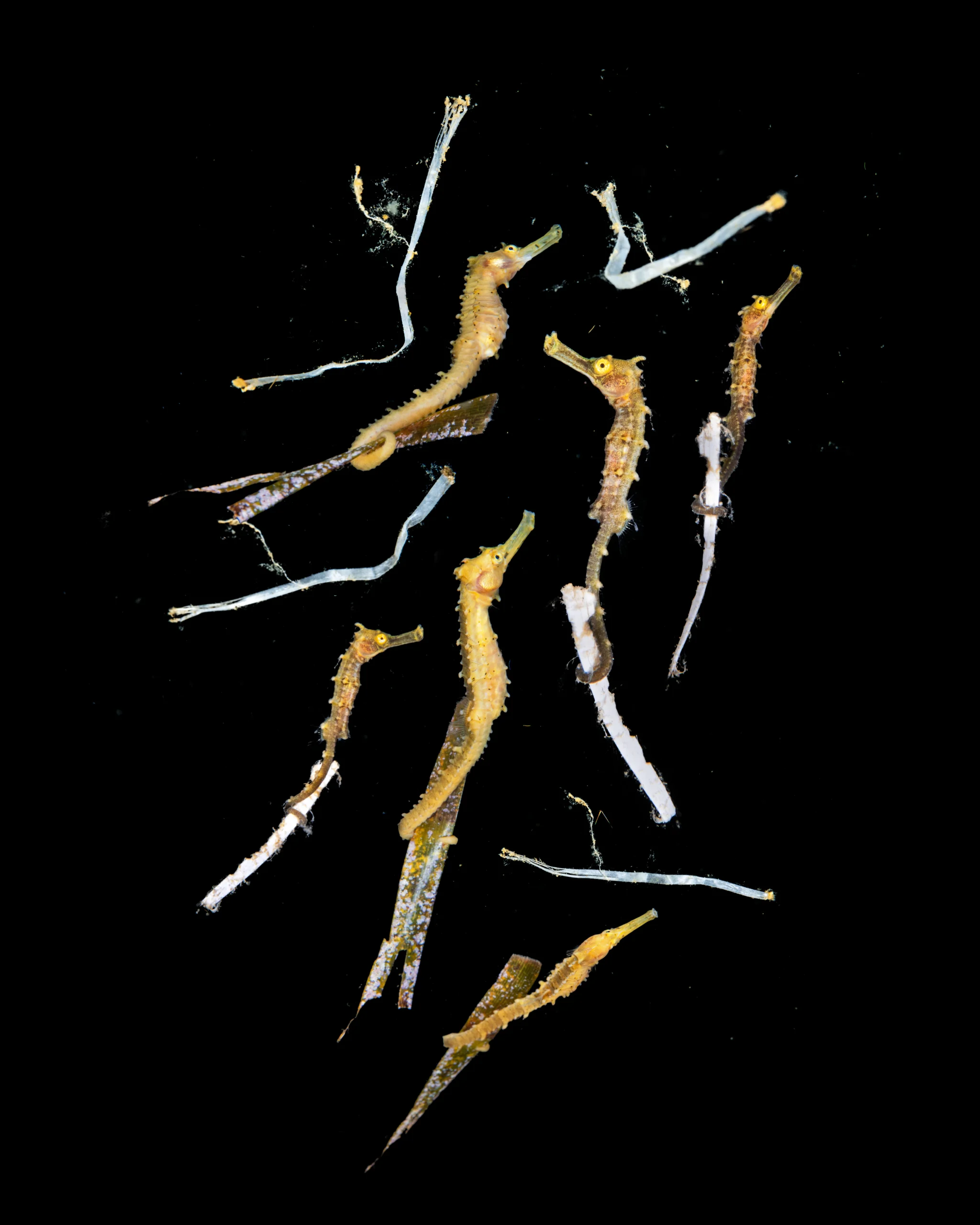
These concepts possess a more somber tone compared to Nocturne, though Andie hopes to balance urgency and optimism, avoiding an attitude of “doomism” that does more harm than good. She mentions two scientists she admires: primatologist and anthropologist Jane Goodall, and marine biologist and oceanographer Sylvia Earl.
“These incredible women interacted with nature and people for decades. They saw the ugliest things, but they still held onto hope—in communities, knowledge, and collective action,” the artist states. “So why shouldn’t we do the same? There’s no excuse not to.”
Andie’s Nocturne couldn’t have arrived at a more timely moment: during the Artemis II lunar flyby. Something one of its astronauts, Victor Glover, shares in a brief speech feels particularly resonant in this context.
“I think maybe the distance we are from you makes you think what we’re doing is special, but we’re the same distance from you. And I’m trying to tell you, just trust me, you are special,” he shares. “In all of this emptiness—this is a whole bunch of nothing, this thing we call the universe—you have this oasis, this beautiful place that we get to exist [in] together.
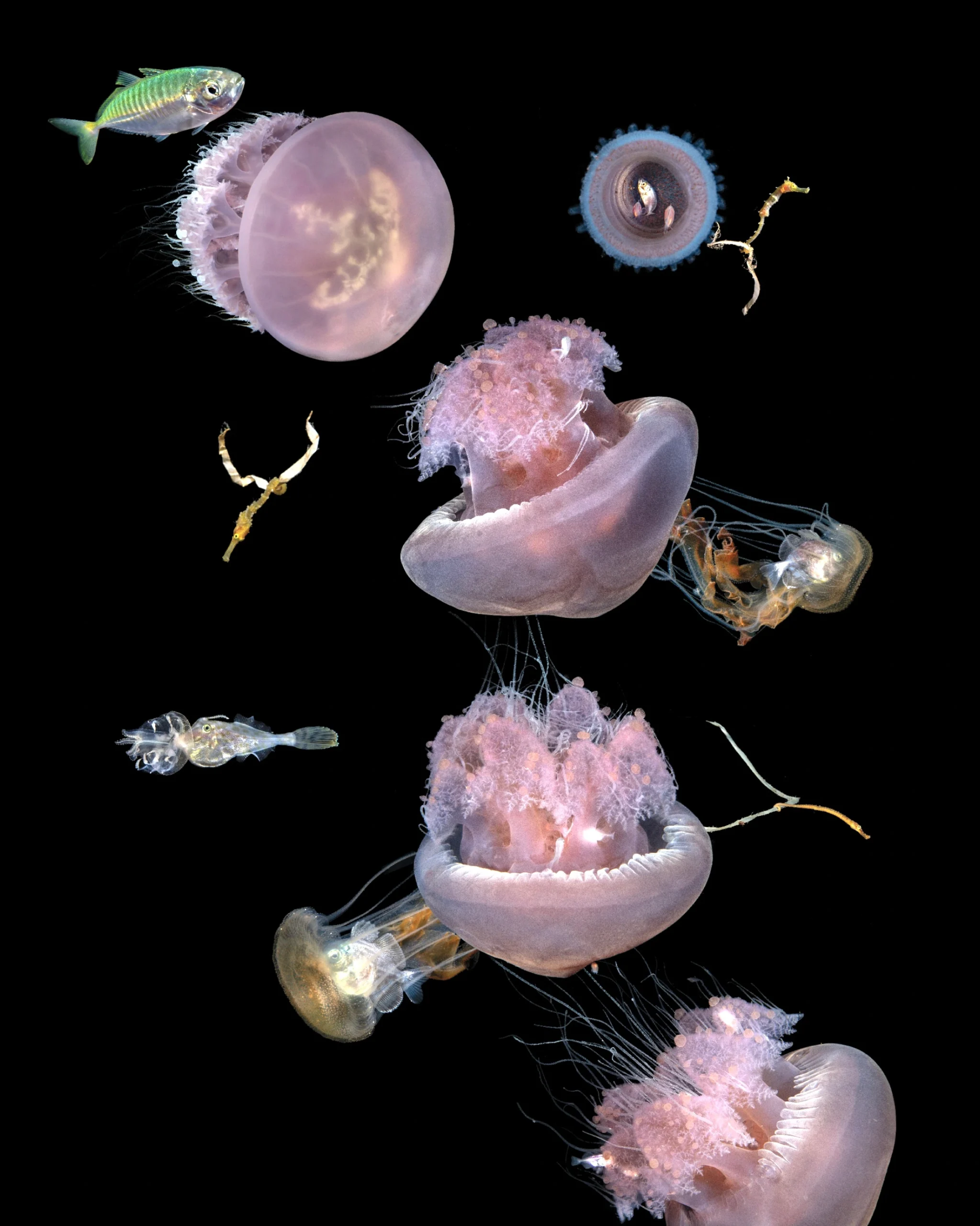
We end with a line from the Ada Limón poem, which Andie actually referenced in her exhibition: “And it is not darkness that unites us,/not the cold distance of space, but/the offering of water, each drop of rain,//each rivulet, each pulse, each vein.” The diamond squids drift away from home, as do Andie and the astronauts of Artemis II. But the point of the journey isn’t to leave for good. They always return with a renewed perspective, one that reinforces the idea that the transcendent world we seek is already here: life itself, lying right under our noses and waiting to be felt.
All photos courtesy of Andie Remulla
Frequently Asked Questions
Andie Remulla is an underwater macro photographer and artist known for her “blackwater” photography, a niche practice that captures tiny marine creatures in the deep ocean at night. She now works as a full-time artist based primarily in Anilao, Batangas.
Blackwater photography is a specialized form of underwater photography done at night in deep ocean waters, focusing on small, often larval marine creatures—sometimes no larger than the palm of a hand. It requires technical diving skills, precision, and the ability to safely navigate unpredictable conditions while capturing moving subjects.
Nocturne: A Call Through The Dark is Andie Remulla’s first solo exhibition, exploring the parallels between the ocean and outer space. The works feature deep-sea creatures set against cosmic backdrops of planets and stars, presented on lightboxes to highlight their vivid colors and evoke a sense of wonder, discovery, and optimism.
Her work centers on curiosity, wonder, and the beauty of often-overlooked marine life, while also encouraging deeper awareness of environmental issues. Through both her photography and future projects, she aims to foster connection with nature, highlight the impact of waste on marine ecosystems, and inspire appreciation for the intricate systems that sustain life on Earth.
Blackwater photography is a type of underwater macro photography done in the open ocean at night, capturing tiny marine creatures in near-total darkness. Andie Remulla is a Filipino artist and blackwater photographer based in Anilao, Batangas, known for her solo exhibition Nocturne: A Call Through the Dark.