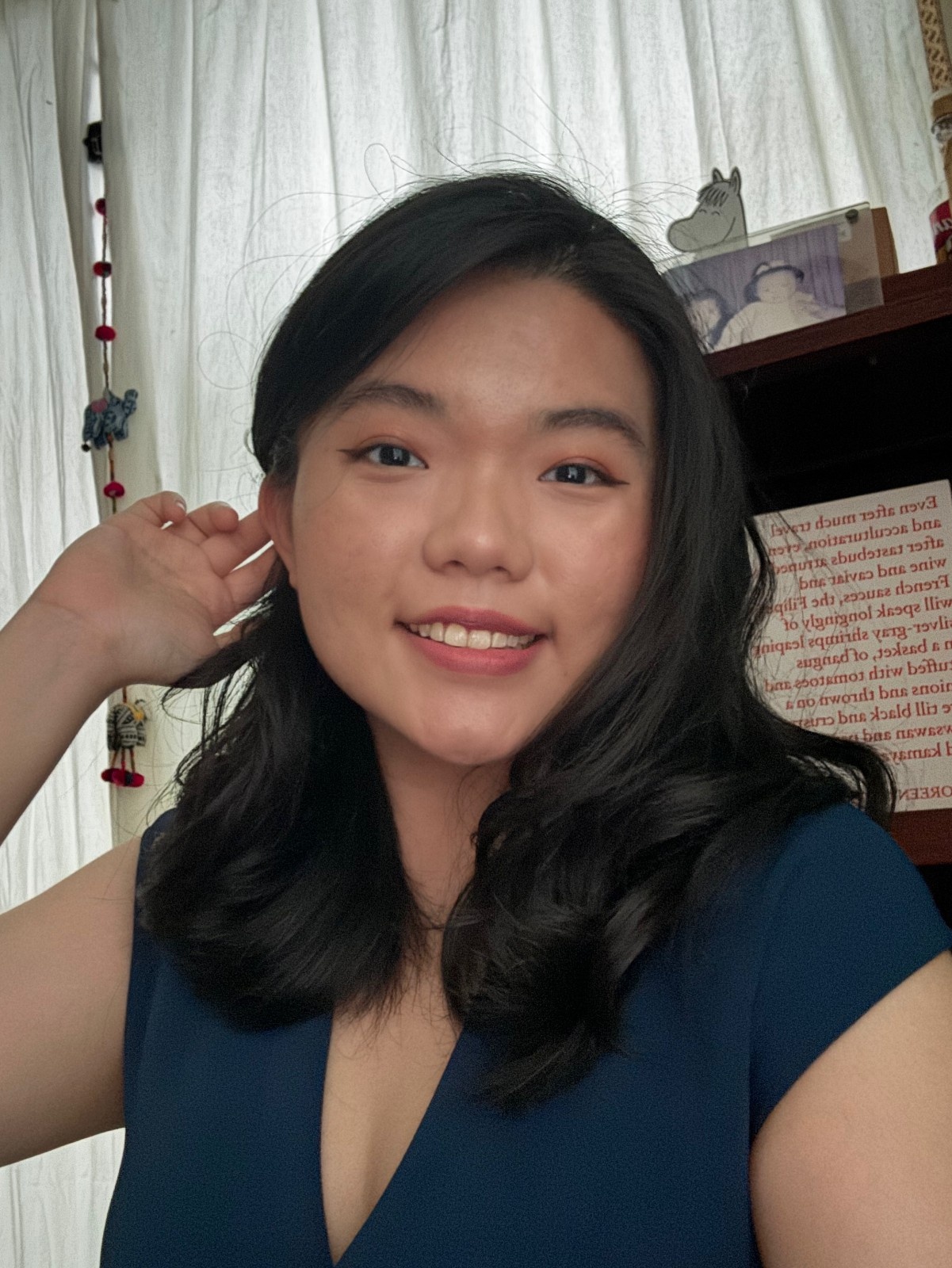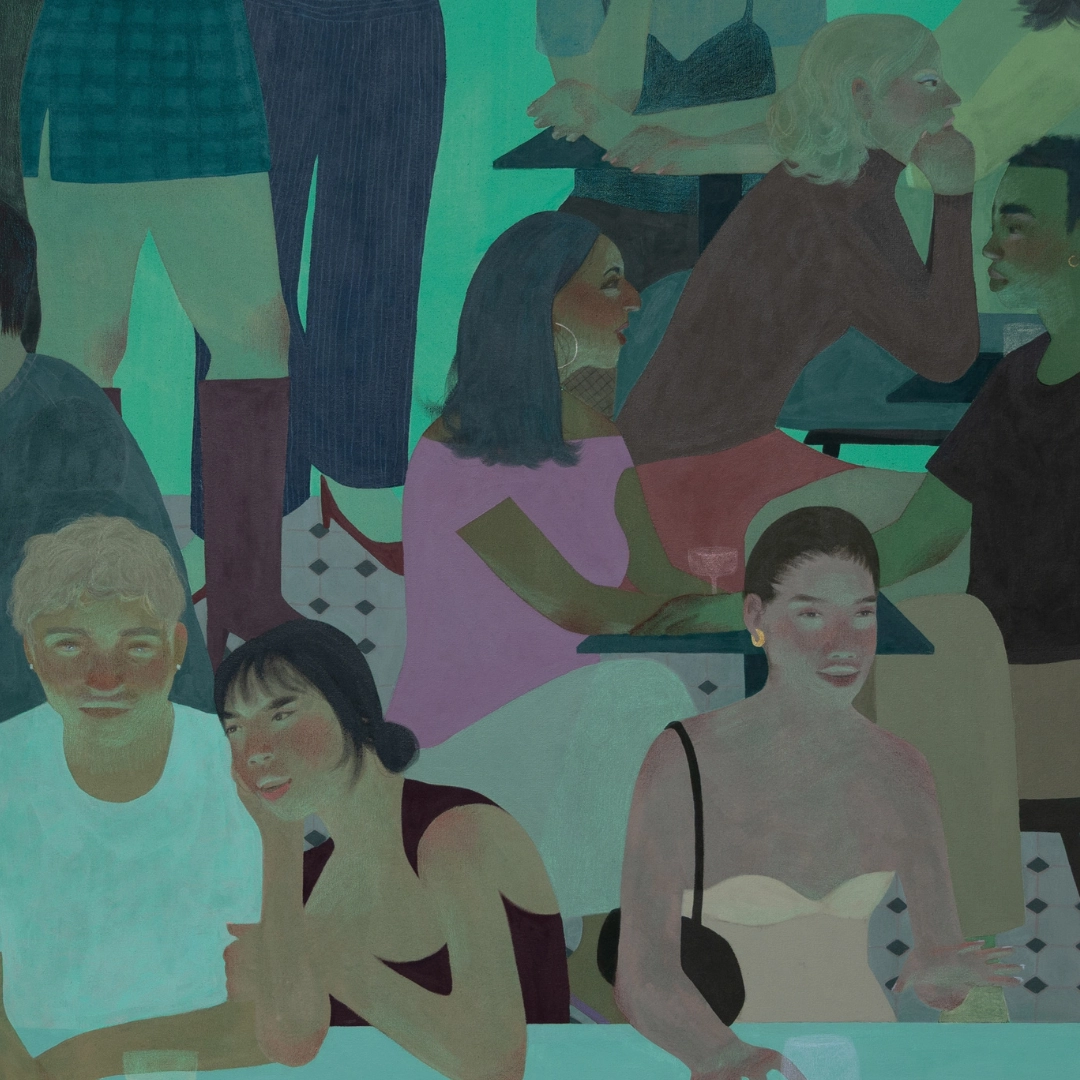
Raya Simpao’s vibrant paintings of bodies interacting in space, gazes met and unmet, invite us to let personal histories, layered psychologies, and complex dynamics come into view, while offering a glimpse into her own way of seeing the world.
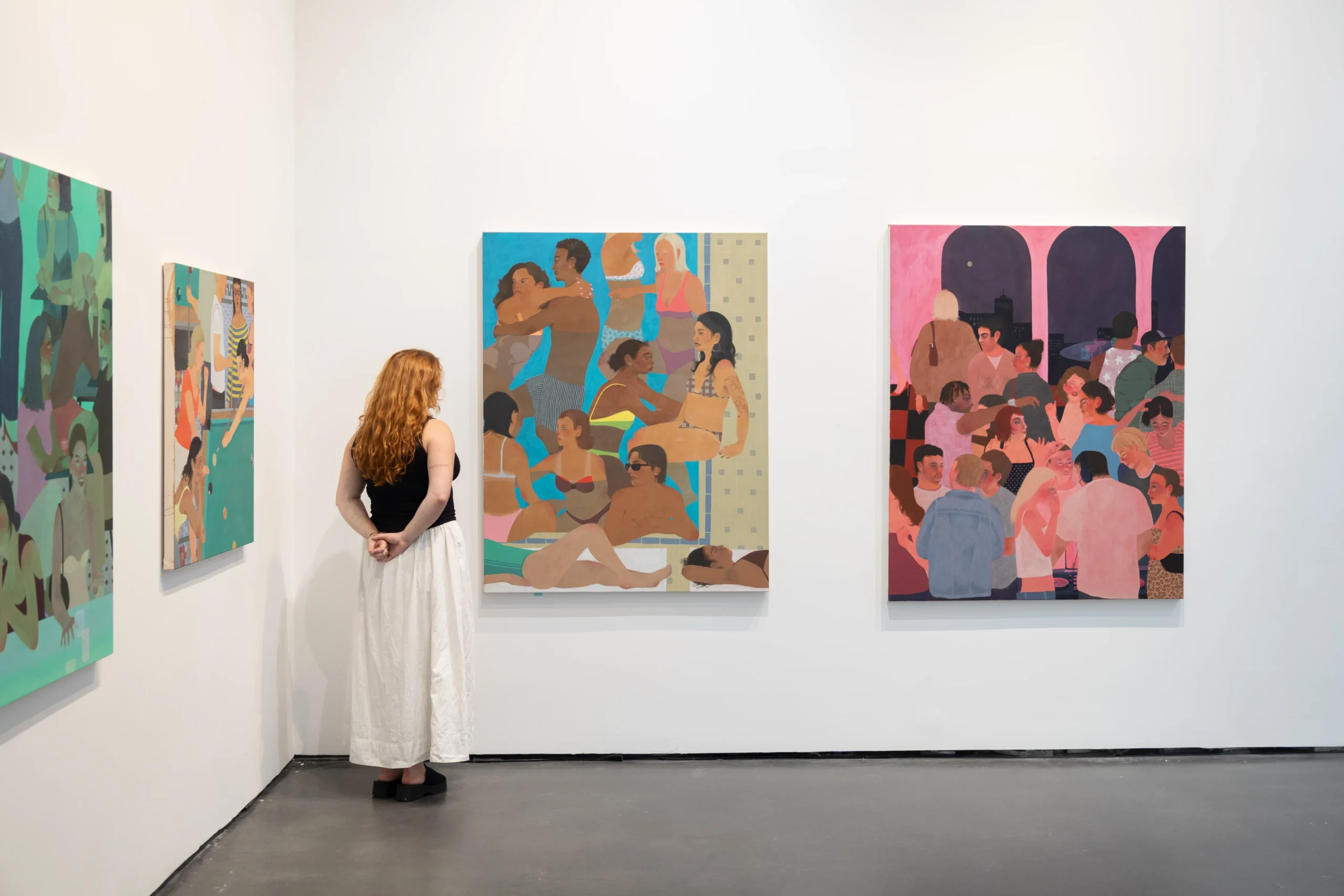
A gaze reveals what words cannot. It’s desire, fixation, care-laden observance, a way of communicating what cannot be uttered. It’s a glass windowpane, a mutual and non-verbal exchange between two people; but sometimes, it’s glass of the one-way kind, unmet, unnoticed, unrequited, the observer taking everything in through silent study. Either way, what emerges are personal histories, layered psychologies, and complex dynamics that live in gesture, suggestion, and the implicit. In the works of US-based Filipino artist Raya Simpao—recently exhibited in the group show No Place at Silverlens, New York—gaze becomes a focal point amid a sea of bodies and faces.
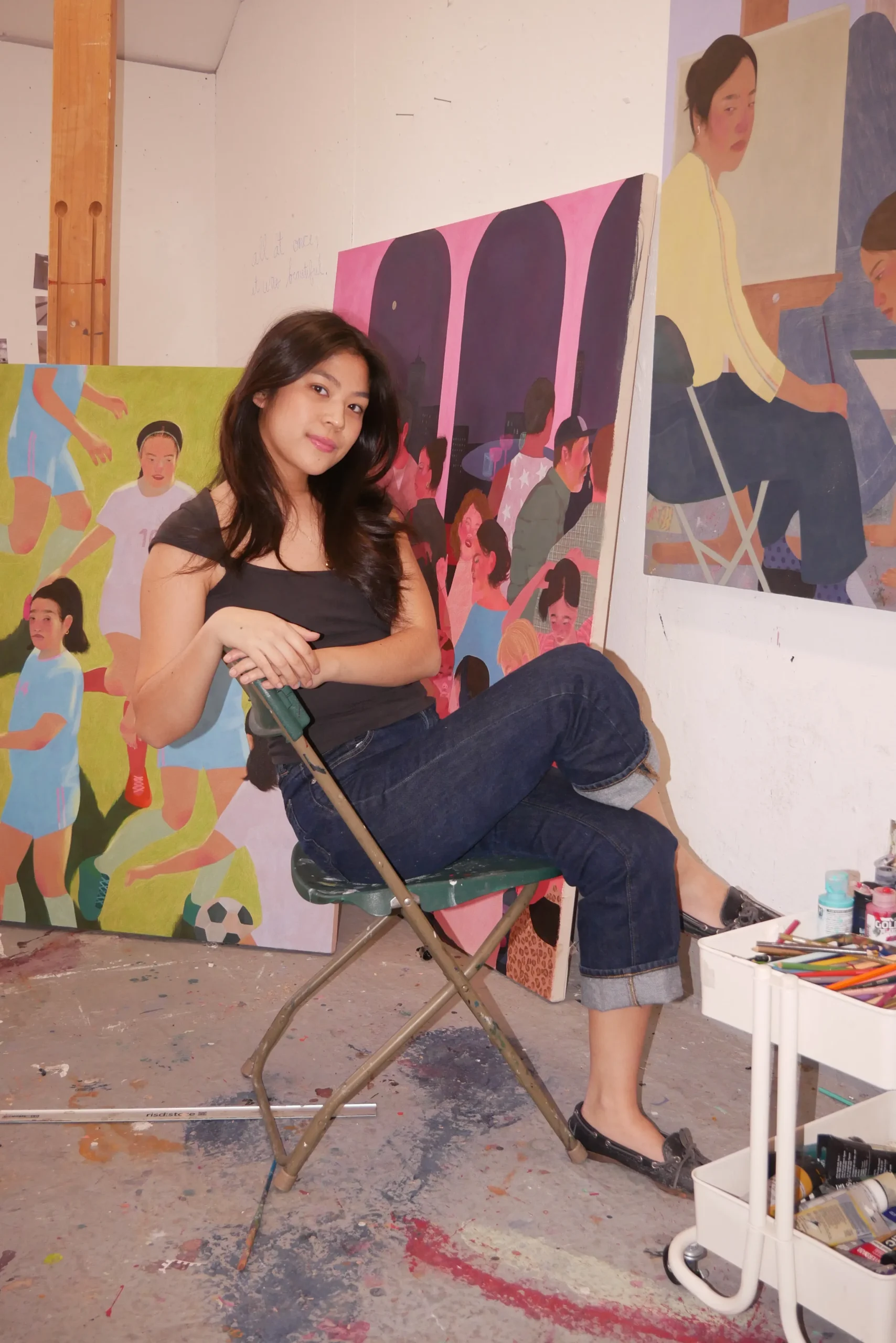
For many artists, the gaze is filtered through memory and translated onto the canvas, an act that’s never neutral or untouched by their own background and perspective. This is where Raya’s story comes in, though you never see it represented through a single figure, place, or theme. What you see are multiplicities that reveal her understanding of the world around her—and by extension, herself—just as much as they peel back the stories of the people, spaces, and interactions within them.
READ ALSO: In “See Through” By Alex Westfall, Time Follows No Chronology
Space To Create: How Raya Simpao Began Her Art Career
Born in Manila in 2003 and now based in Brooklyn, New York, Raya Simpao came to painting through a lifelong impulse to make things. She credits an early childhood of being homeschooled by her mother from first to sixth grade for giving her the space to create, allowing her to explore interests like drawing, writing, and sewing before discovering oil painting in high school during the pandemic.
“I did oil portrait commissions for fun and a little bit of extra allowance here and there. I didn’t really know what it meant to pursue art seriously since up to that point it had been purely leisurely,” she tells Lifestyle Asia. “Up to now, I still have a hard time fathoming that I can call this my job due to how much I love and enjoy it. I feel immensely grateful for that.”
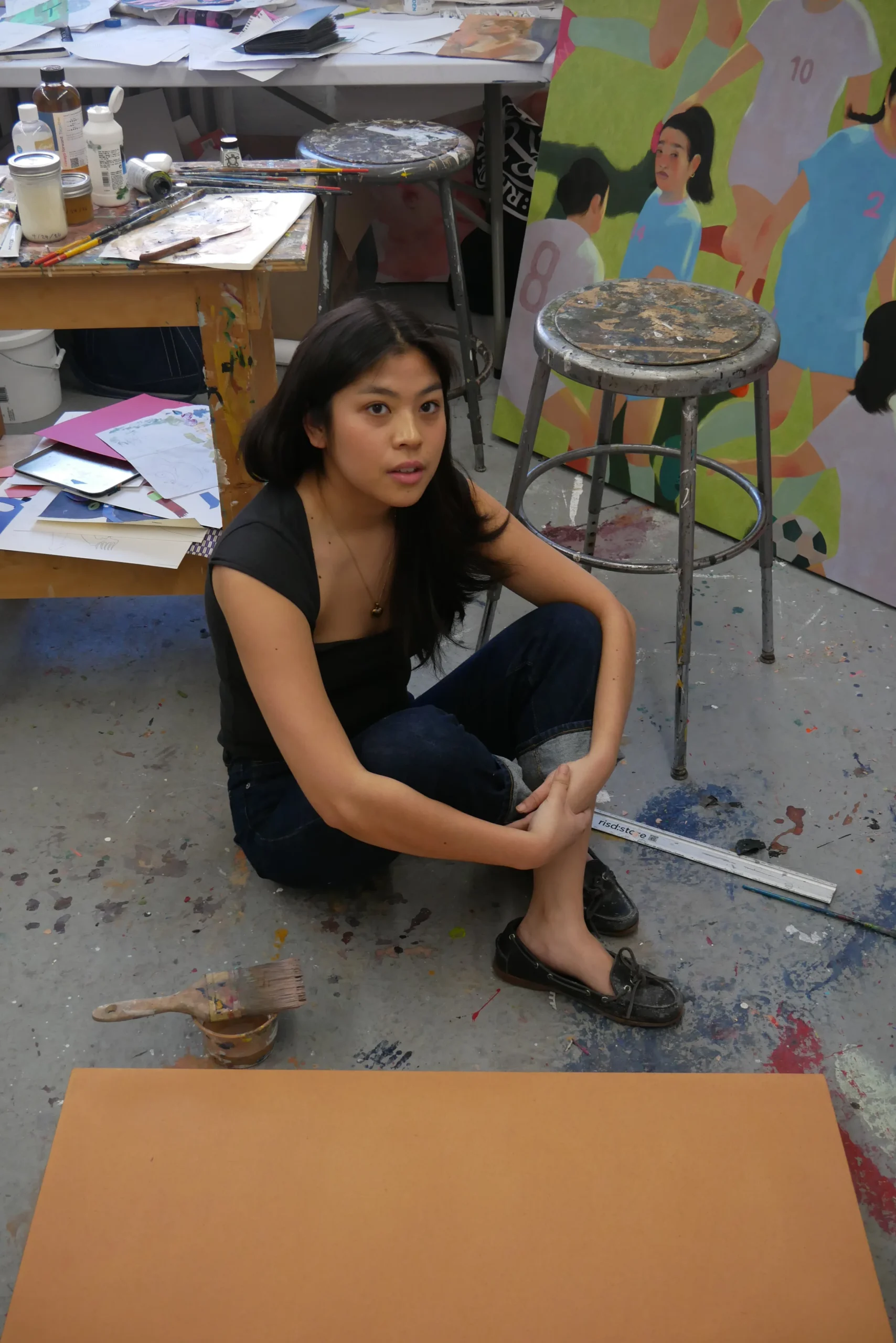
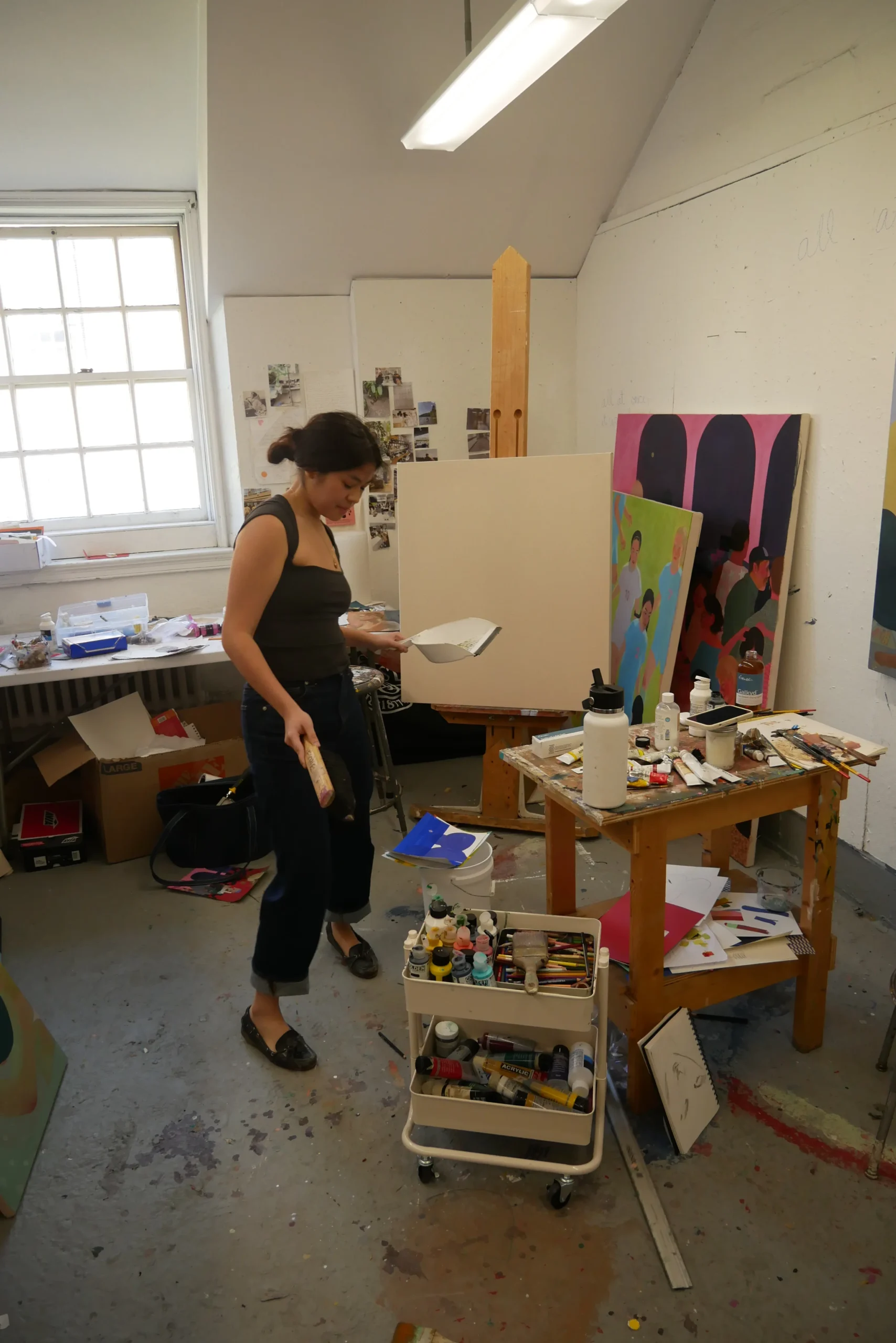
It wasn’t until college that she realized she couldn’t imagine herself devoting her energy to anything other than art. This led her to the Rhode Island School of Design, where she graduated with a BFA in Painting in 2026. Her work also earned her the Florence Leif Award and 2026 Spring Innovate Grant, and has been featured by various arts platforms including Nicotine Magazine, The Hopper Prize, House House Magazine, and Booooooom.
Living in the United States, Raya began to understand that artmaking wasn’t merely creative practice, but a lens through which to see and experience the small worlds of a new country, injecting questions of familiarity and difference into her work as a Filipina surrounded by diverse cultures, perspectives, and personalities.
The Unneutral Gaze
The neutral gaze doesn’t exist, just as art is never apolitical, even when some may insist that politics need not interfere with it. What an artist chooses to look at, and consequently what they choose to place within a frame, already signals what they find to be important. There’s prioritization—and conversely, through the act of omission, de-prioritization, at work. Even the seemingly incidental details that make it onto a canvas are the result of attention, influenced by what an artist chooses—for creation is never a passive act—to remember, see, alter, and render from their pool of subjective memory and experience.
To quote art critic and writer John Berger in his seminal work Ways of Seeing, “Every image embodies a way of seeing. […] The painter’s way of seeing is reconstituted by the marks he makes on the canvas or paper.” Yet there’s more at work within a painting than an image born from the perspective of its artist. Once it reaches the viewer, it’s filtered through another set of personal histories and experiences, which invariably play a role in lending it a certain meaning. As Berger adds, “Yet, although every image embodies a way of seeing, our perception or appreciation of an image depends also upon our own way of seeing.”
Raya’s figurative paintings often take recognizable scenes from lived experience, creating a point of entry between artist and viewer. “It’s a way that I seek a relationship with whoever sees it, as if I am saying ‘Oh you might know what this is, this is something we may have both seen’,” she explains. Recognition becomes a means of establishing common ground, while also allowing the viewer to consider where they stand in relation to her.
Painting requires Raya to stay with what she sees for longer. “I like to think that I am spending time with an idea, person, place, or thing,” she says. That time is attentive and forensic in nature: “I can take a picture of a room but I may not notice what everyone is wearing or acknowledge the walls in the background. In painting that same room, I must sit with everything for a moment whether it be baby hairs or floor tile patterns.”
What makes it onto the canvas, then, isn’t just what exists before her, but what she has chosen to spend time seeing. That choice is inseparable from who’s doing the looking. Raya is conscious of the privileges and circumstances that’ve shaped her access to art, as well as the experience of moving from Manila to the United State. “The only thing I can really be sure of is what I have seen, and still I try to be aware of the various factors that are affecting how I see,” she explains. “Being Filipino, being a woman, being young, they all play a role in how I see.”
Portraiture As An Exercise In Empathy
It’s this awareness that keeps Raya’s paintings open rather than prescriptive. She’s not trying to shoehorn her works into a category of representation solely focused on explicit depictions of Filipino identity, race, gender, or cultureCultureshared traditions, beliefs, values, customs, arts, and social practices that define the identity and way of life of a community, society, or nation.Go to Culture Glossary. Instead, she follows what draws her attention, trusting that deeper questions will surface through the process.
“I would hope for themes of difference, contradiction, and coexistence to be present in the paintings as these ideas live within me all the time,” she shares.
Identity is something that need not be spelled out, just as much as one’s beliefs. It bleeds through the small decisions. For Raya, part of that process is learning to look at what feels unfamiliar without rushing to define it. Having grown up in Manila before moving to the United States, she found herself looking at Filipino culture and values from a distance, in relation to new and foreign perspectives.
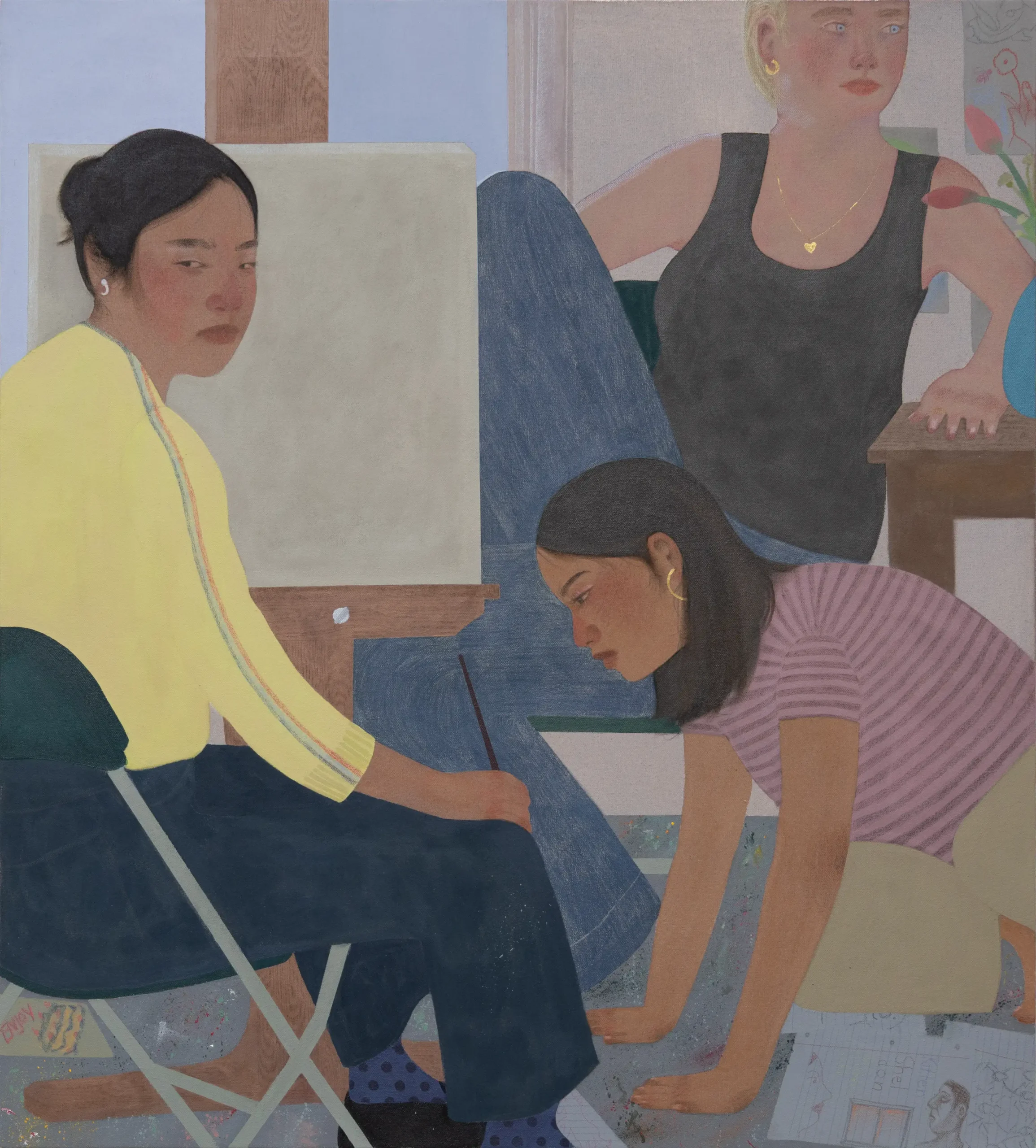
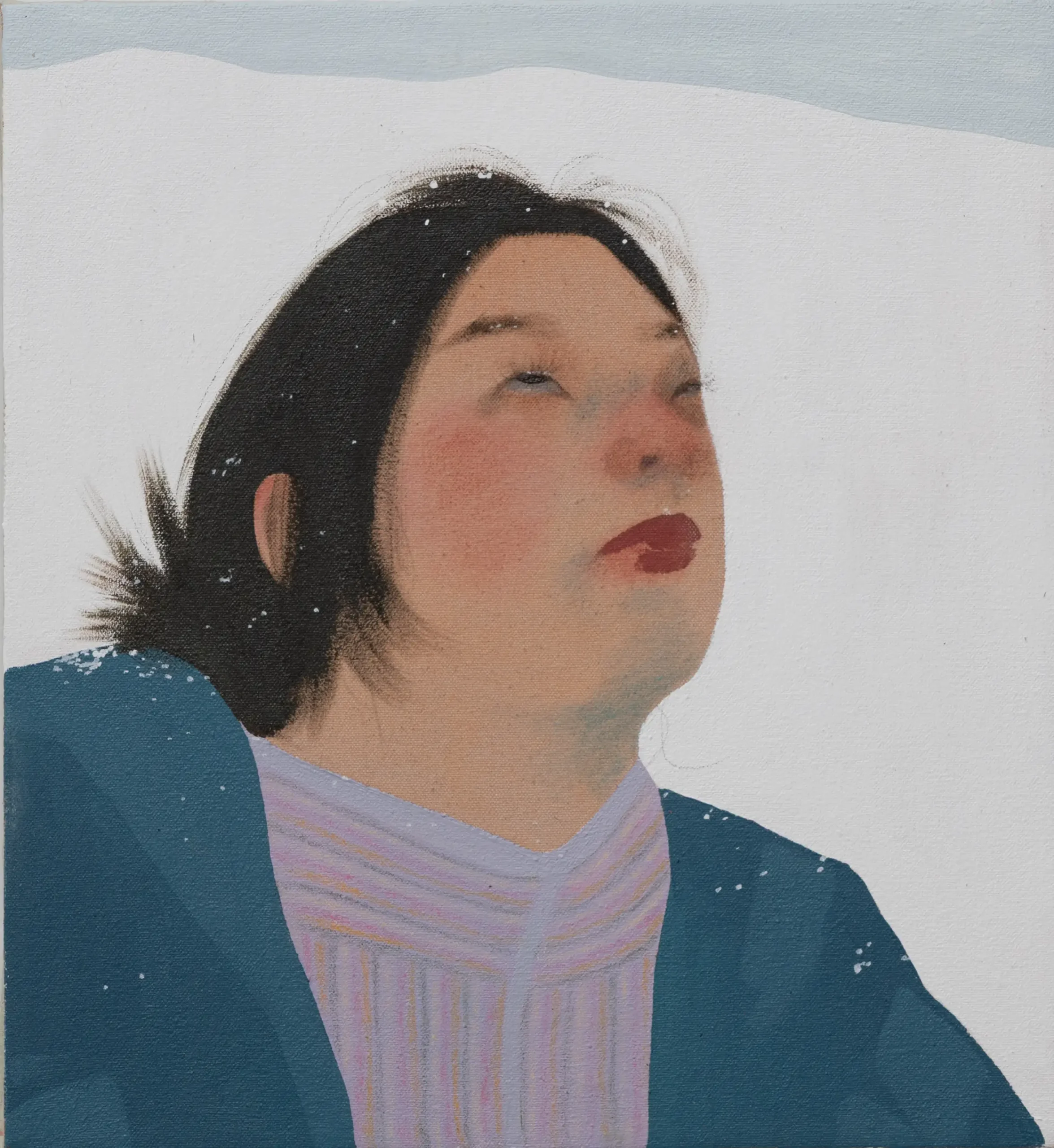
“These are things I am trying to dissect through my work, all stemming from an attitude of openness rather than judgement,” she states. That openness informs the way she approaches the people who populate her paintings. Her move toward depicting figures who don’t necessarily resemble her began with a question: What would it mean for me to paint people that did not look like me? She had previously felt most comfortable using her own likeness as an anchor point, but painting unfamiliar figures introduced a different kind of responsibility, one that required her to recognize both the possibilities of learning about other people and the limits of how much she can actually know about them.
In other words, it’s a practice in empathy: you can, at least through the imagination, place yourself in someone else’s shoes; try to consider how they might feel or react in a situation; observe them keenly; but you can never be them.
“I think it’s important to learn to relate to what may look or seem different, while also acknowledging that there may be parts of someone else’s experience that you will never fully see through,” she explains. It’s a sentiment that mirrors the gaze itself—an attempt to understand another person while remaining conscious of the distance between looking and truly knowing.
The Subtext Of The Everyday
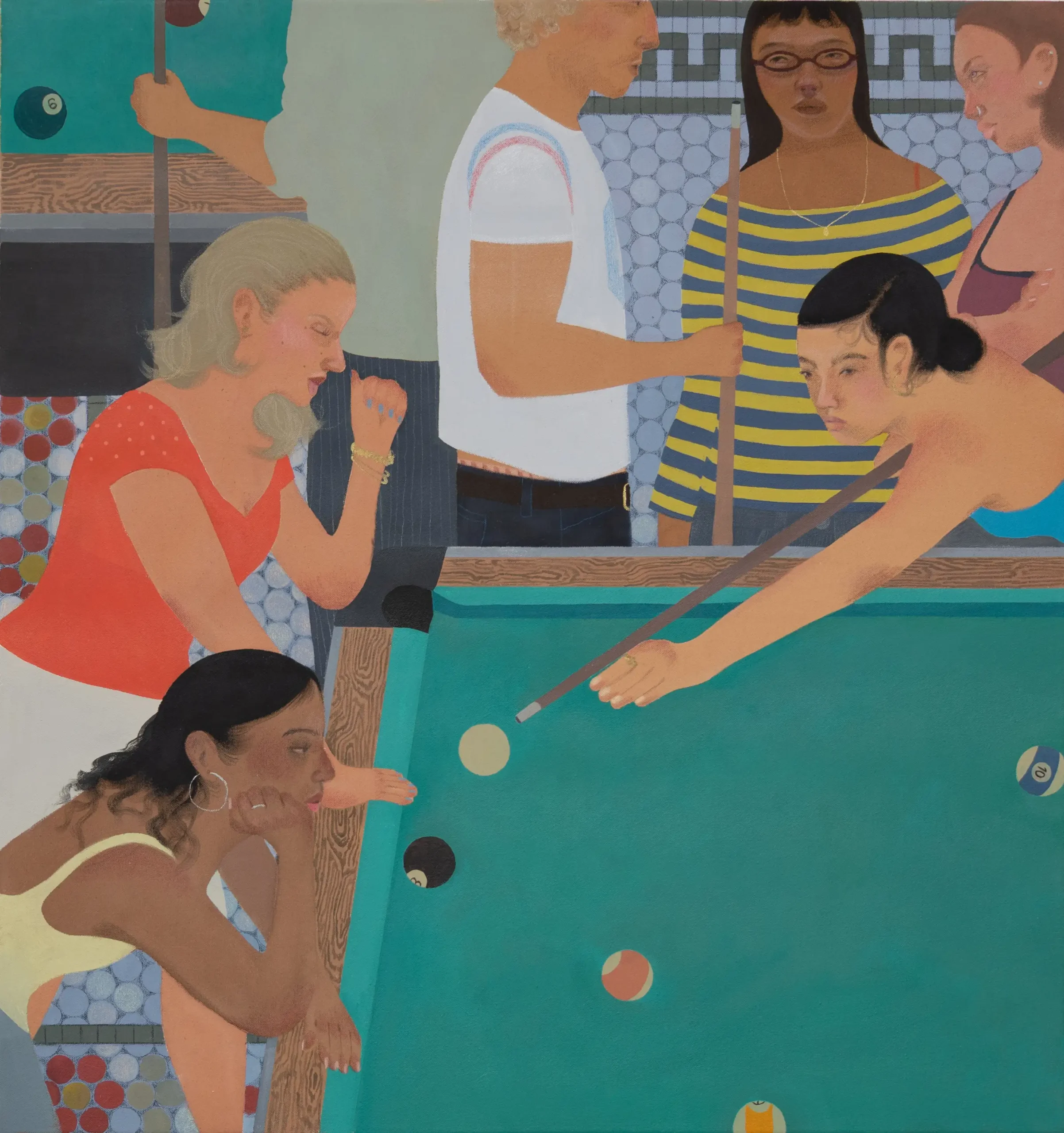
This may be why Raya’s scenes are so often populated by ordinary encounters: people gathered at parties, sitting at bars, going on dates. While the artist initially felt that these subjects were superficial, she eventually saw how the quotidian can become an entry point into something bigger: those oftentimes indescribable feelings and experiences that occupy these everyday spaces and moments.
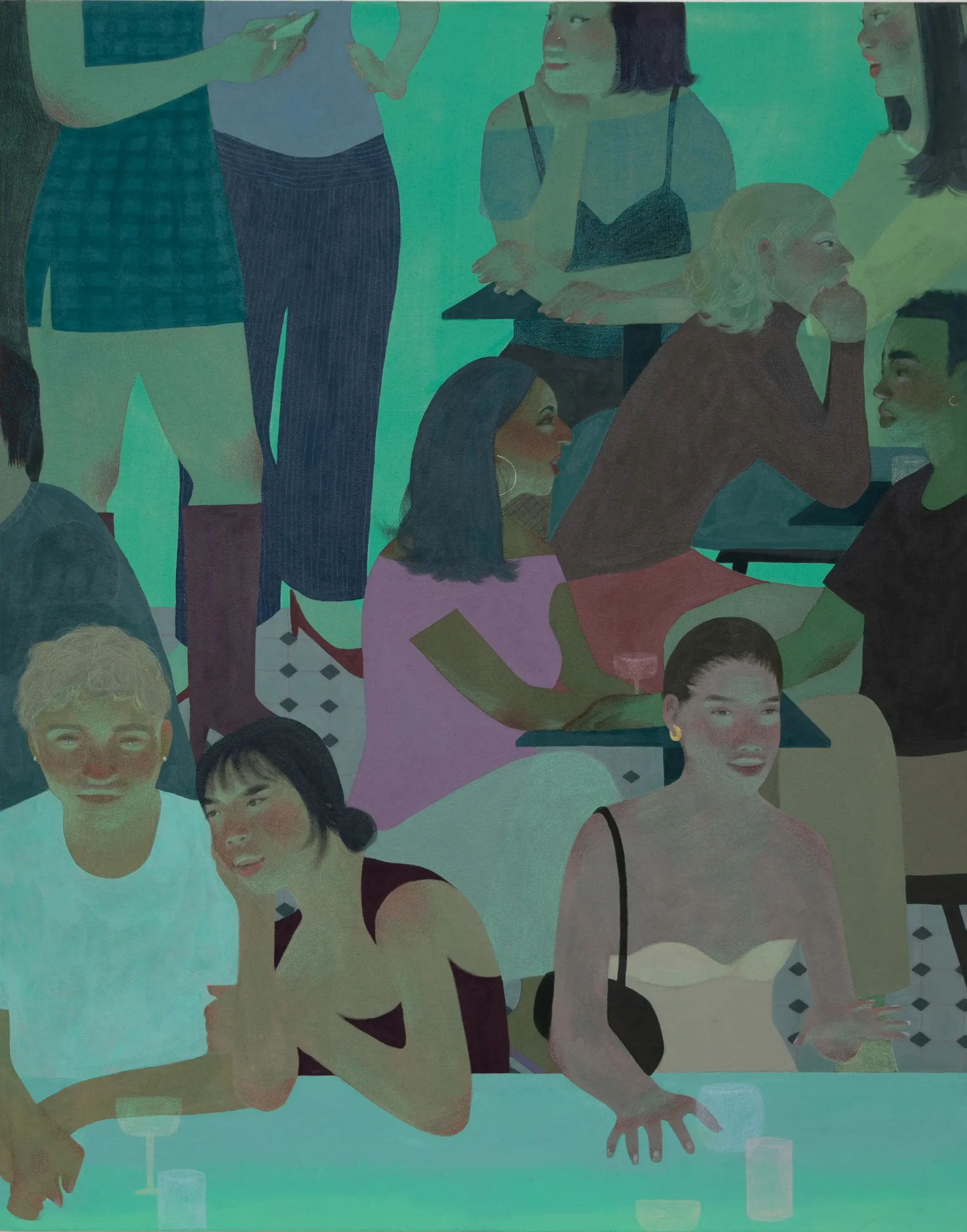
“I realize these situations acted as a means for me to explore questions about race, gender, cultureCultureshared traditions, beliefs, values, customs, arts, and social practices that define the identity and way of life of a community, society, or nation.Go to Culture Glossary, and psychology that felt large and ambiguous to address directly,” she notes. Rather than imposing those questions onto the canvas, she allows them to surface through the lives she happens to be looking at.
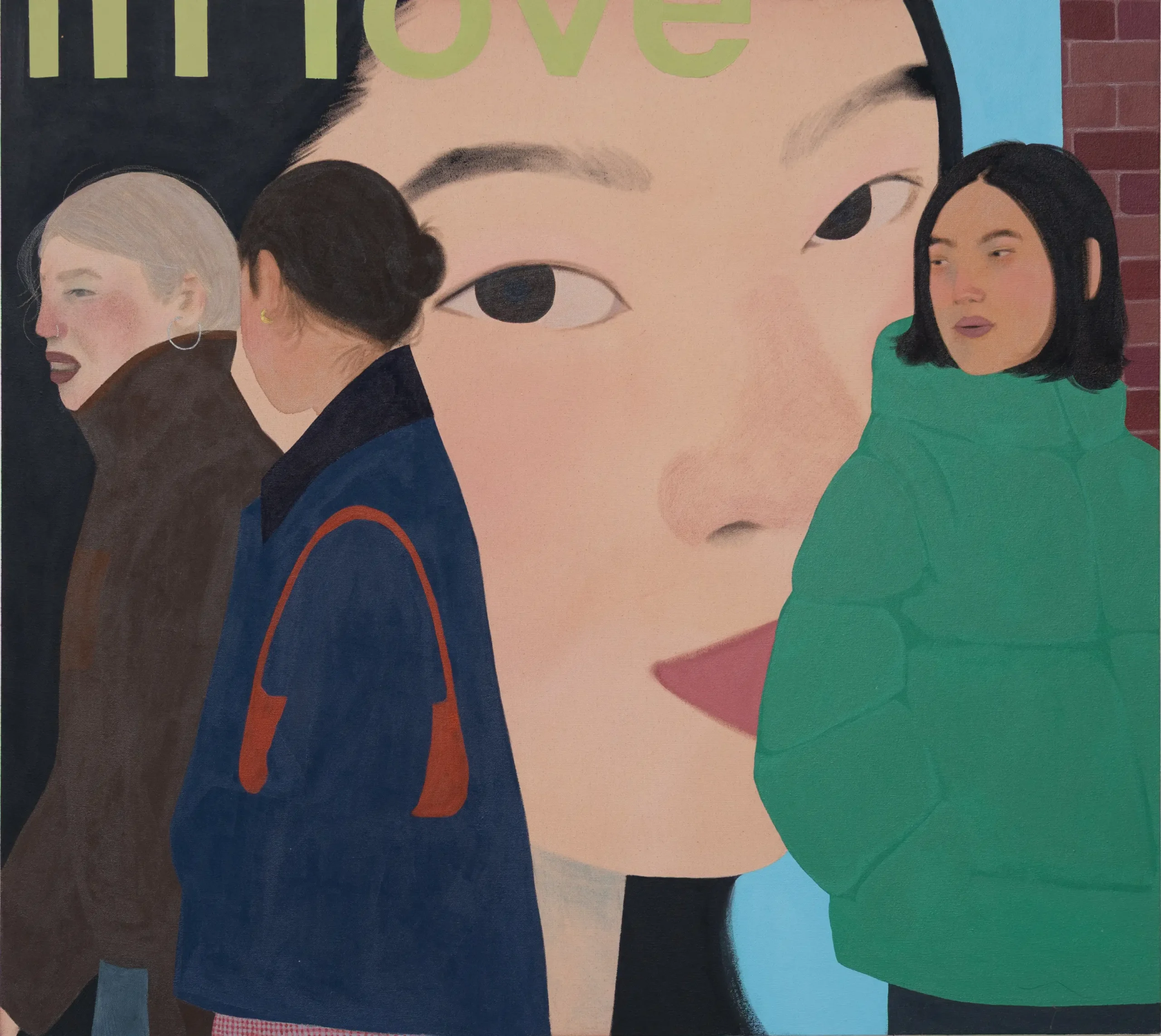
Take the work “Newbury Street,” a snapshot of passersby: one girl looking at two women, another gaze coming from the poster of a woman plastered across a red brick wall. You don’t know what they’re thinking about at that moment, but you see the fascination. Perhaps the girl recognized one of the women, or thought she did, or perhaps she simply found herself drawn to an outfit choice.
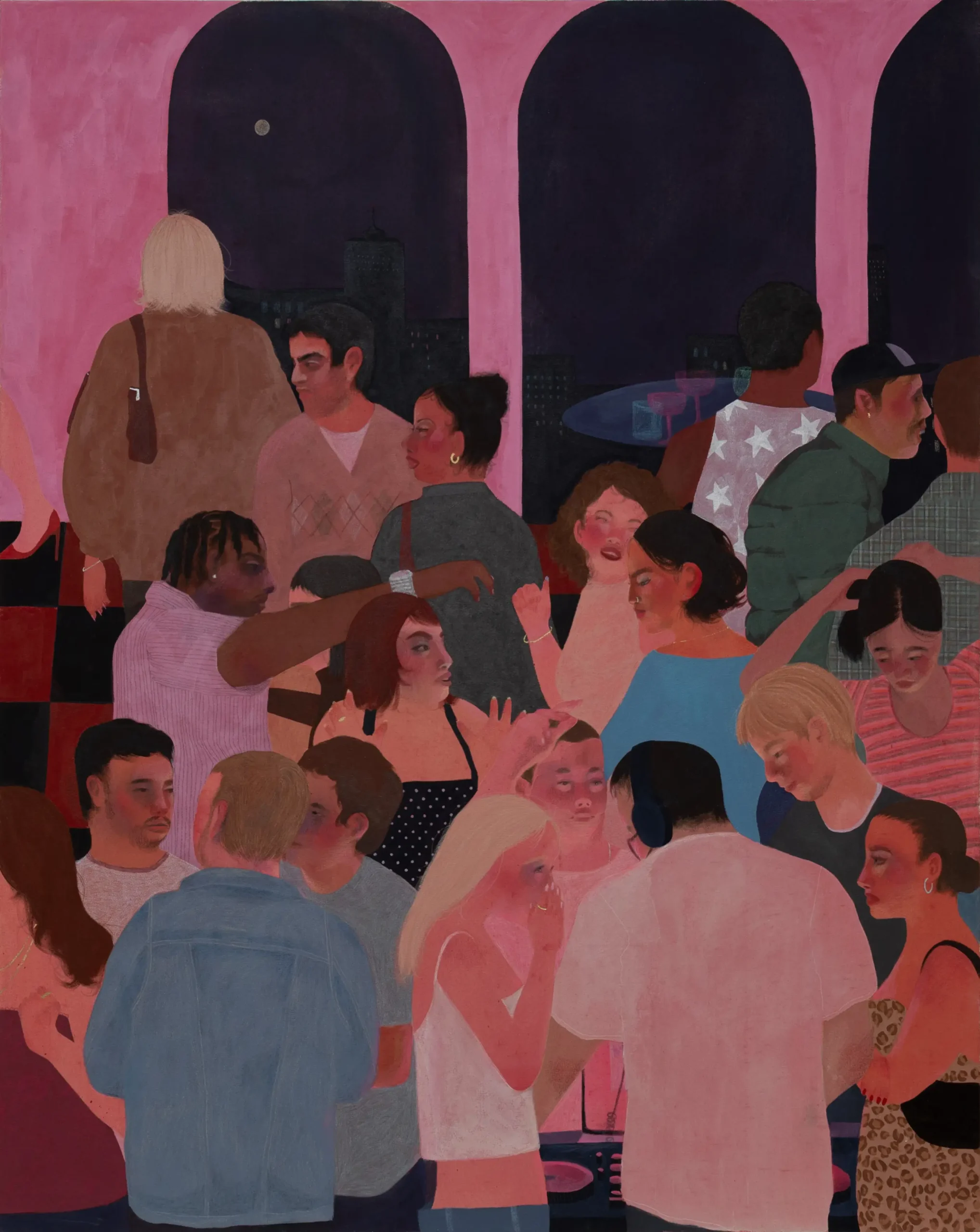
Even the bodies and faces lit by the atmospheric glow of a bar carry their own stories, gazing at one another, looking away, lost in their own worlds and interactions.
One particular work caught my attention: “Endings.” Here, the viewer becomes an omniscient presence, staring down as two people, perhaps lovers or fiancés (the gold ring around the girl’s finger a possible hint), wrap their arms around each other, one obscured from view, the other looking at them. They could be catching up or sharing a moment of affection, yet the title suggests a goodbye or the closing of a chapter: the two bathed in disco lights, locked in a final embrace, one person taking a parting gaze to soak up every detail while her lover remains unaware. We can only guess, yet we feel the situation carries a certain weight, even with its soft pastel hues.
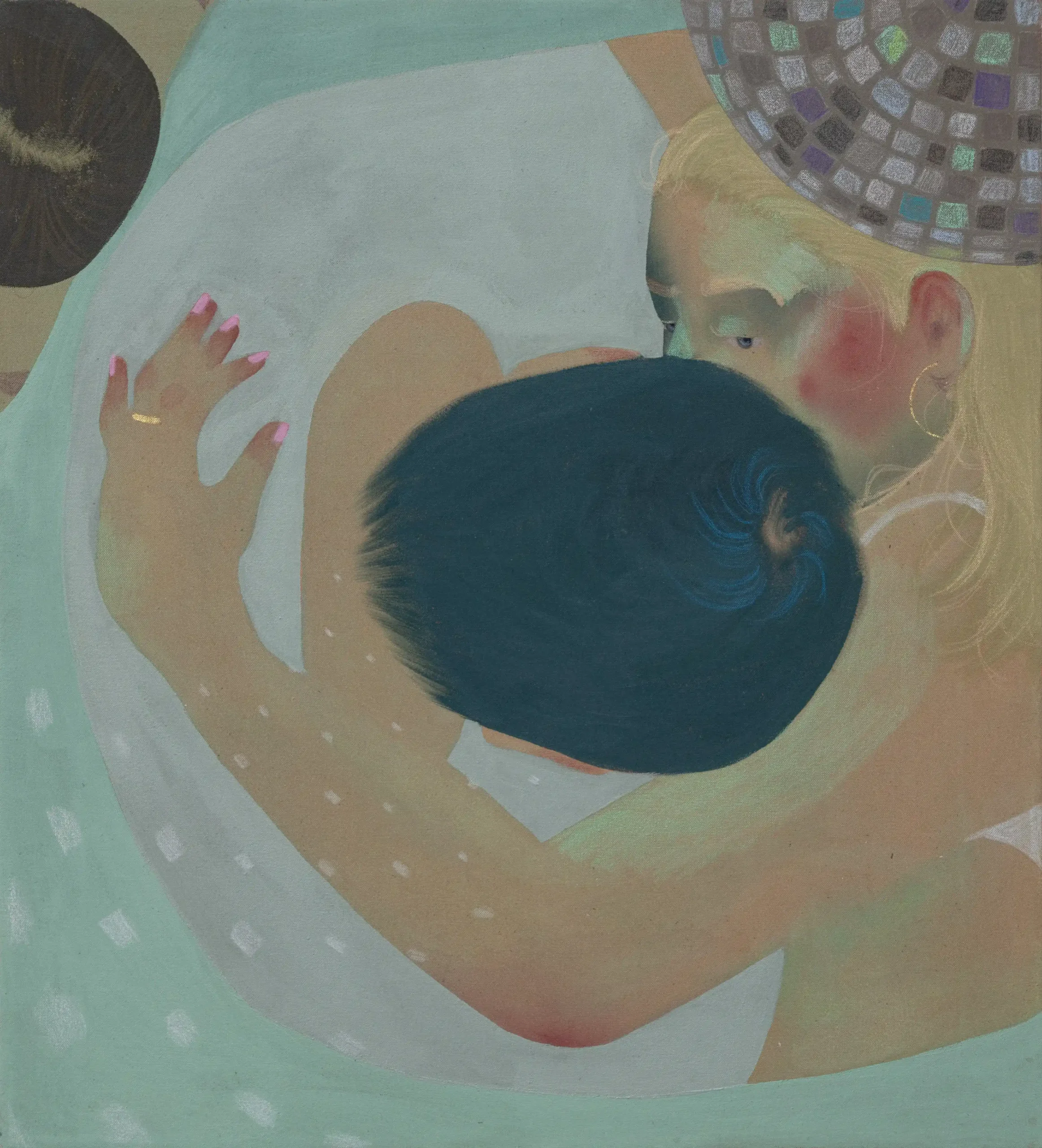
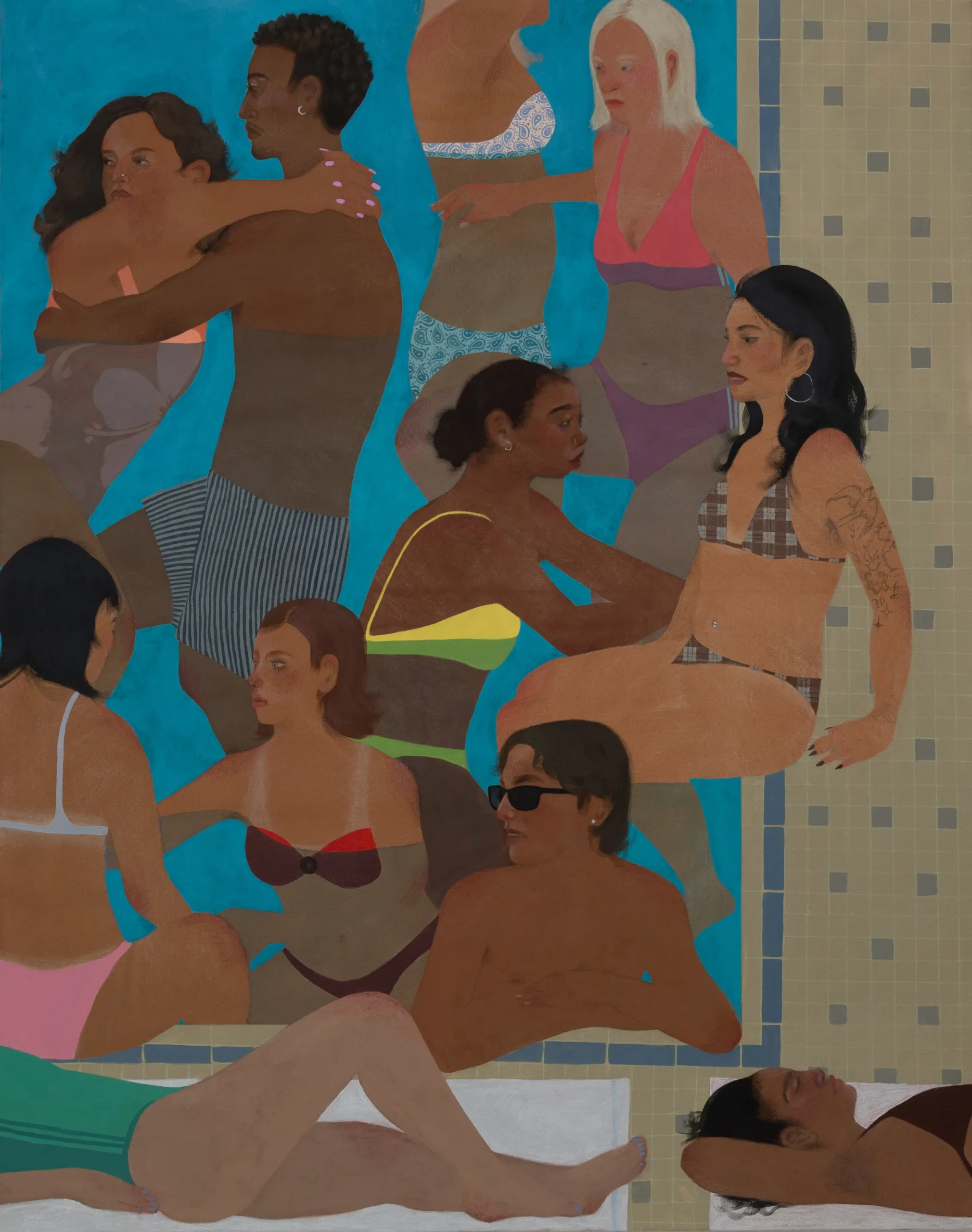
Raya’s works evoke the neologism “sonder,” a word coined to describe the very specific realization or understanding that all other people have lives as complex as one’s own. In a crowded pool, a bar, a corner of the street, even a small art studio shared among friends, there are a million stories unfolding at once, gazes met and unmet, a web of private thoughts and histories. We can look closely, imagine, empathize, even recognize something of ourselves in another person, but there will always be things we cannot know. What makes Raya’s paintings so compelling is that they ask us to look, and then to look again—not simply at the people before us, but at the vast inner lives that exist just beyond what we can see.
Artworks by Raya Simpao, all photos courtesy of Silverlens (Manila/New York)
Frequently Asked Questions
Raya Simpao is a Filipino artist born in Manila in 2003 and now based in Brooklyn, New York. She graduated from the Rhode Island School of Design with a BFA in Painting in 2026. Her work explores lived experiences, everyday encounters, difference, contradiction, coexistence, and the ways people see and understand one another.
Raya Simpao is known for her figurative paintings of recognizable scenes from lived experience, often depicting people gathered at parties, sitting at bars, going on dates, or interacting in everyday spaces. Her paintings use these ordinary encounters to explore broader questions about race, gender, culture, psychology, and the complexities of human relationships.
Raya Simpao explores themes of difference, contradiction, coexistence, identity, empathy, race, gender, culture, and psychology. Her paintings often focus on the gaze and the ways people observe, recognize, relate to, and remain separate from one another. Rather than prescribing a single interpretation, she allows these themes to surface through the people and situations she paints.
For Raya Simpao, painting is a way of spending time with an idea, person, place, or thing. She believes that what appears on the canvas is influenced by what an artist chooses to notice, remember, alter, and render. Her process requires sustained attention to details that might otherwise go unnoticed, from what people are wearing to background elements such as walls, baby hairs, and floor tile patterns.
The gaze is central to Raya Simpao’s work because it reveals the personal histories, emotions, and relationships that exist beneath everyday interactions. Her paintings show gazes that are met and unmet, allowing viewers to consider what people may be thinking or feeling while recognizing that another person’s inner life can never be fully known. In this sense, her work invites viewers to look closely and consider the vast inner lives that exist just beyond what they can see.