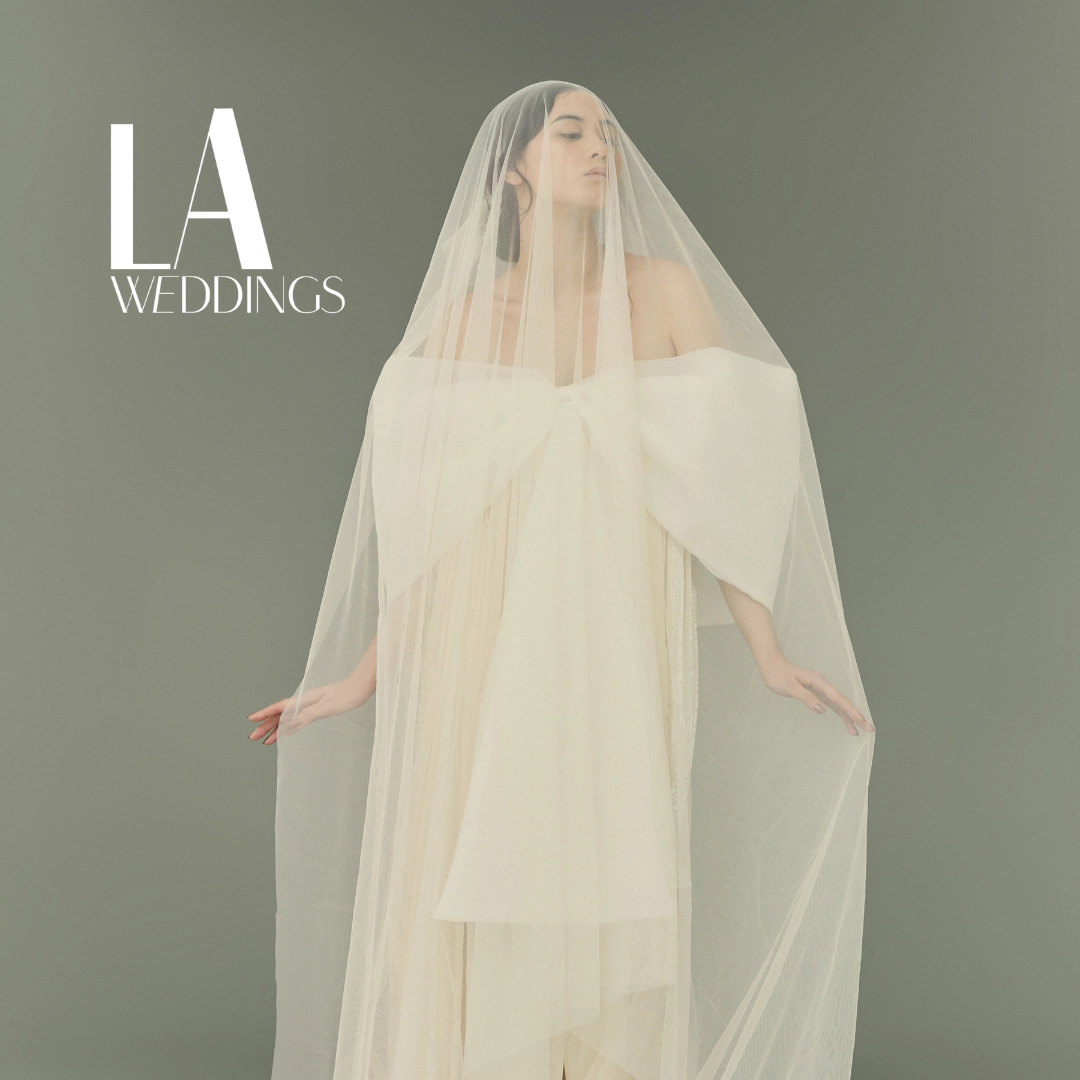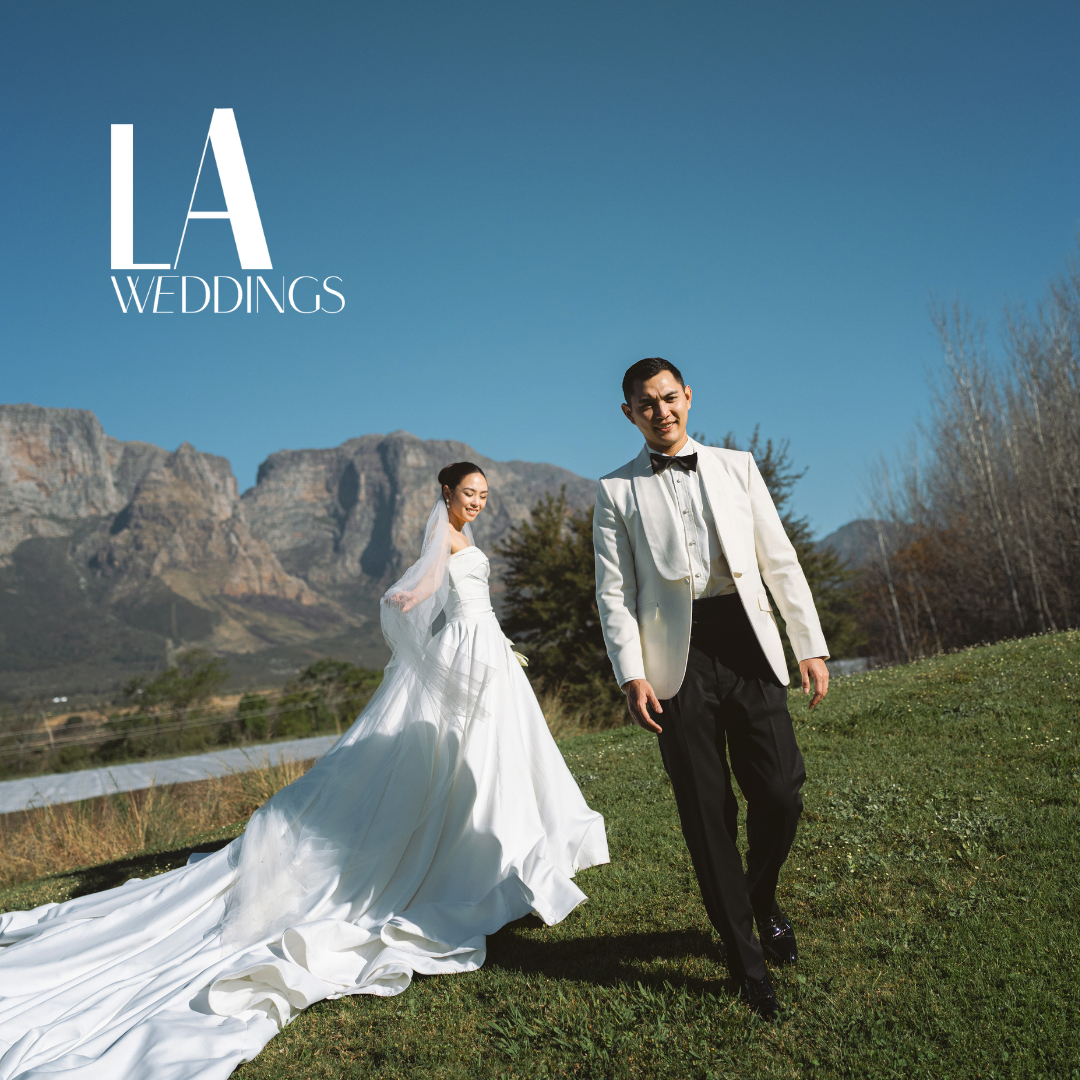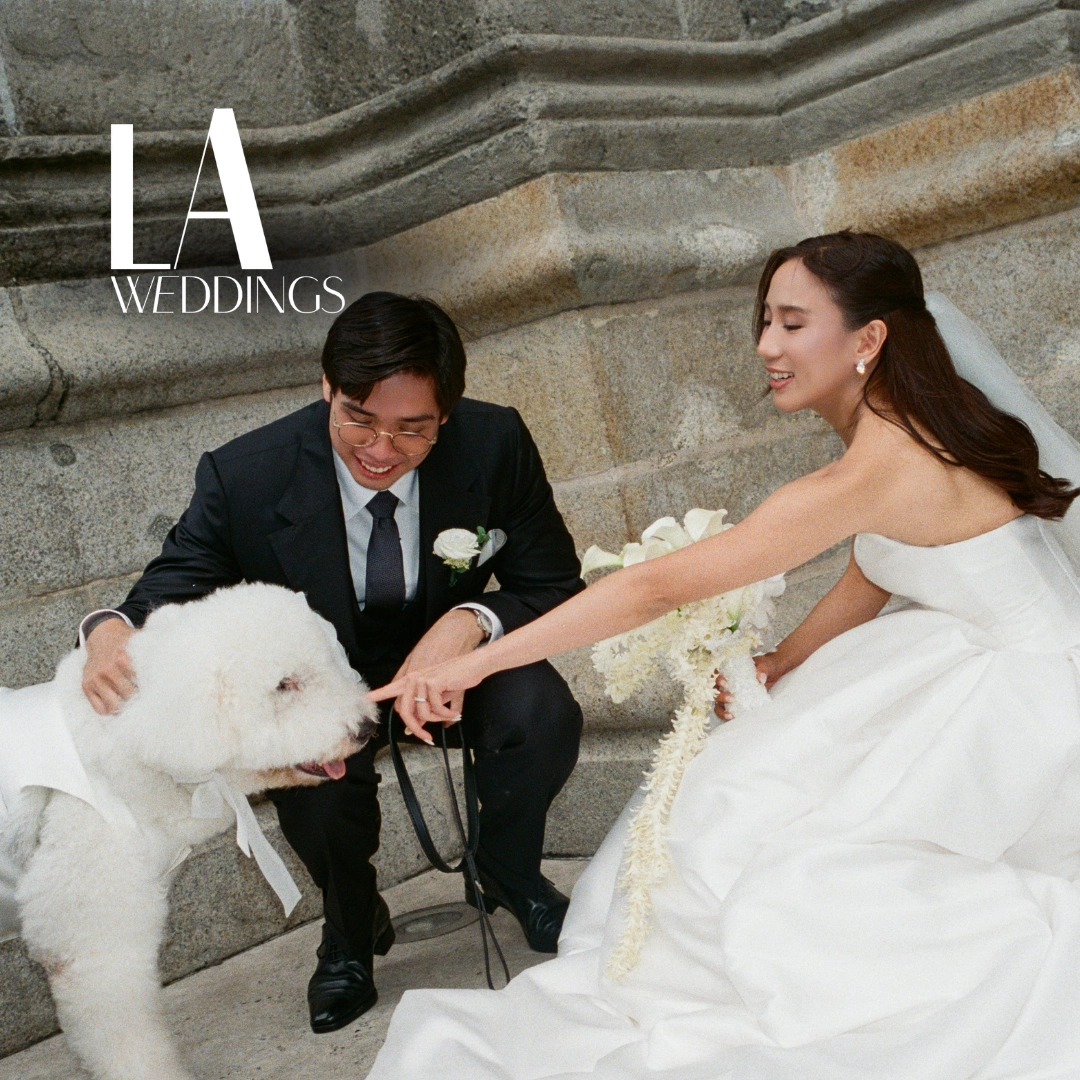
Jenny Feliz Sy shares the story behind her Maison Métisse wedding dress, a one-of-one piece woven using a special Habi-Couture technique.
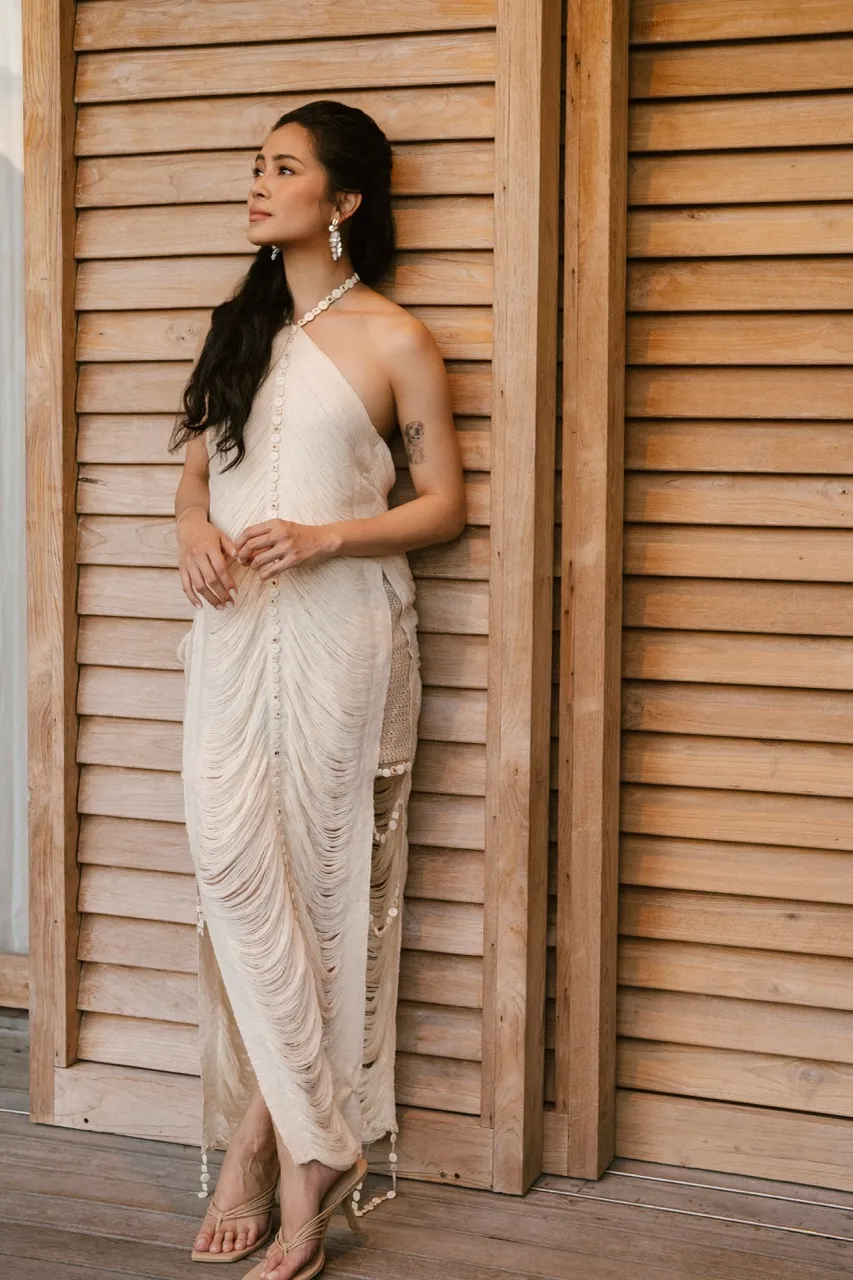
The Maison Métisse dress Jenny Feliz Sy wore during her wedding celebration ended up carrying much more than she had expected. But first we need to go back, years before the wedding itself, when Jenny first encountered Maison Métisse at ArteFino. She makes a habit of visiting local fairs to discover Filipino designers, particularly those with a strong point of view and a commitment to local materials, traditions, and craftsmanship. The label caught her attention through its use of Philippine silk, callado, cotton, and coconut beads, as well as its ability to make these Filipino materials feel contemporary.
When she began planning her wedding wardrobe, it was one of the first names that came back to her. “I wanted the dress to represent my heritage with the same elegance I hoped to bring into the family we were creating,” she tells Lifestyle Asia.
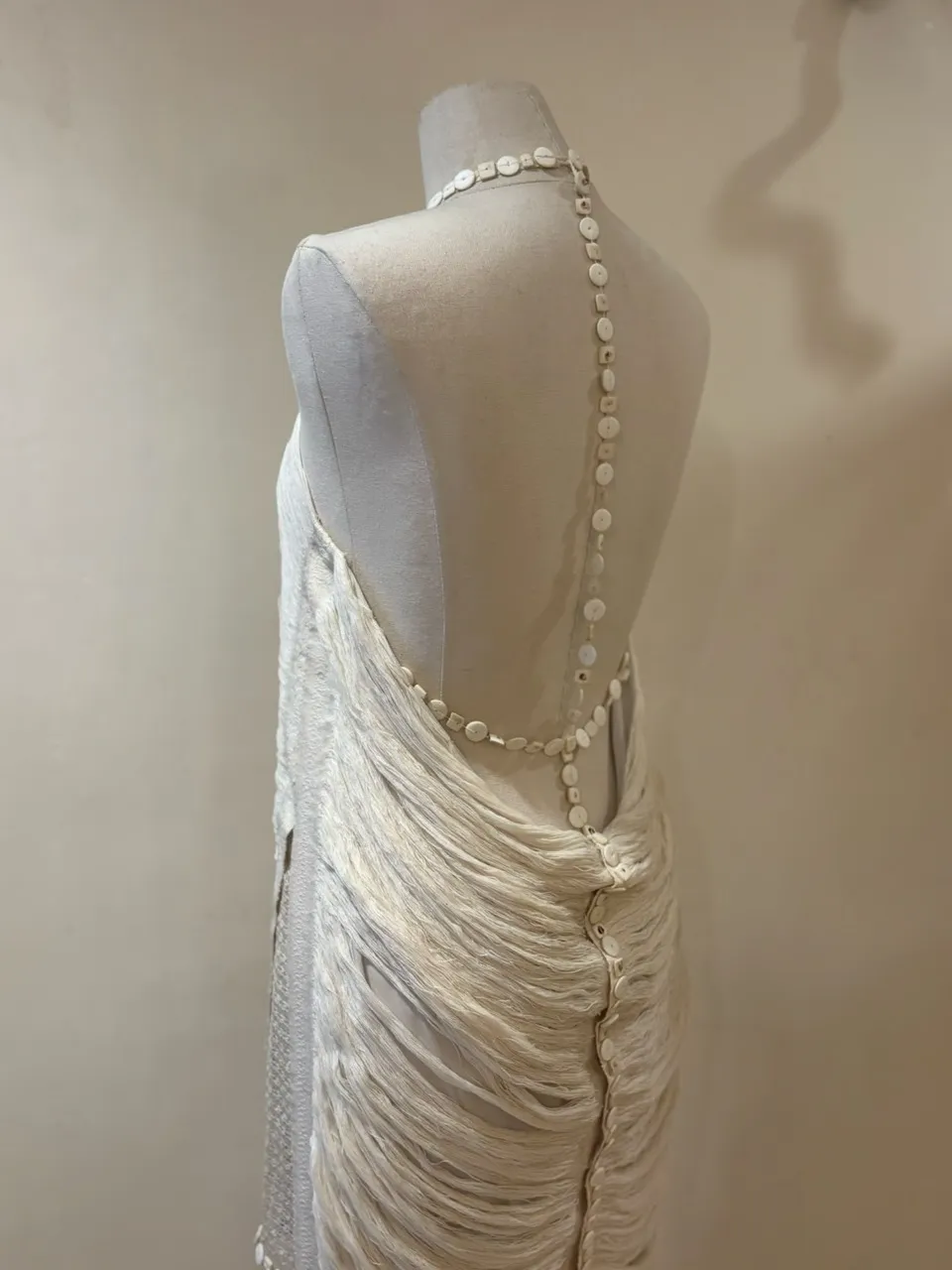
The piece was created by Maison Métisse founder and designer Adrienne Charuel, who describes Jenny as her first bride. The commission also gave her the opportunity to take Habi-Couture, an in-house technique she developed, into eveningwear and bridalwear for the first time. Instead of constructing a garment from pre-woven fabric, the technique involves weaving the garment directly on the loom.

READ ALSO: How To Choose The Right Bridal Veil For Your Wedding
How Maison Métisse Founder Adrienne Charuel Wove A Dress Fit For A Bride
The process took nearly a year. From the initial idea and toiles to the weaving and final handwork, Charuel developed the textile and silhouette alongside each other, using 100% Philippine cotton and piña. The sections were woven directly on the loom before being brought together and finished by hand at the Maison.
The details make the piece even more intimate. Coconut beads were sewn directly onto the garment, while piña side panels from a Lumban artisan were finished with rare sampaguita callado done by hand. Every part of the dress reflects the time and labor behind its construction.
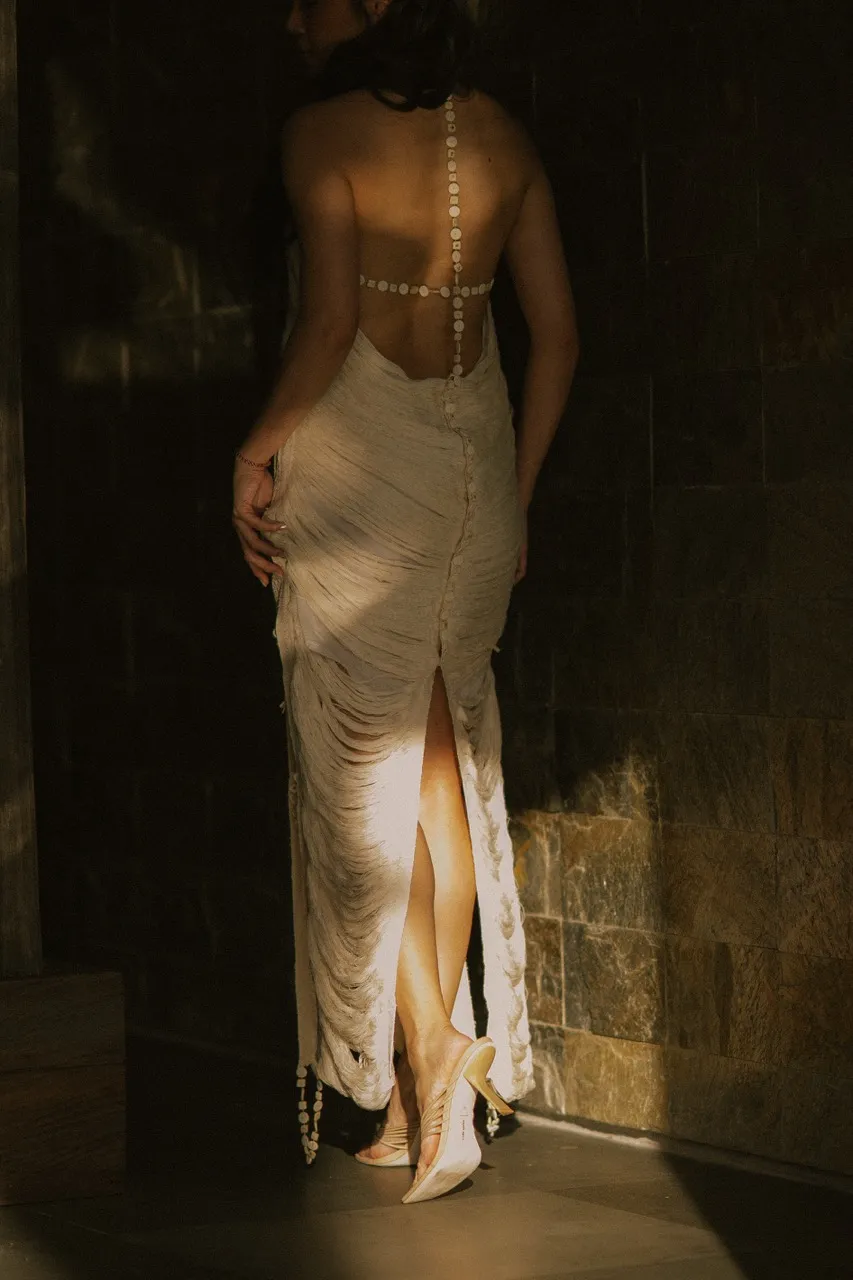
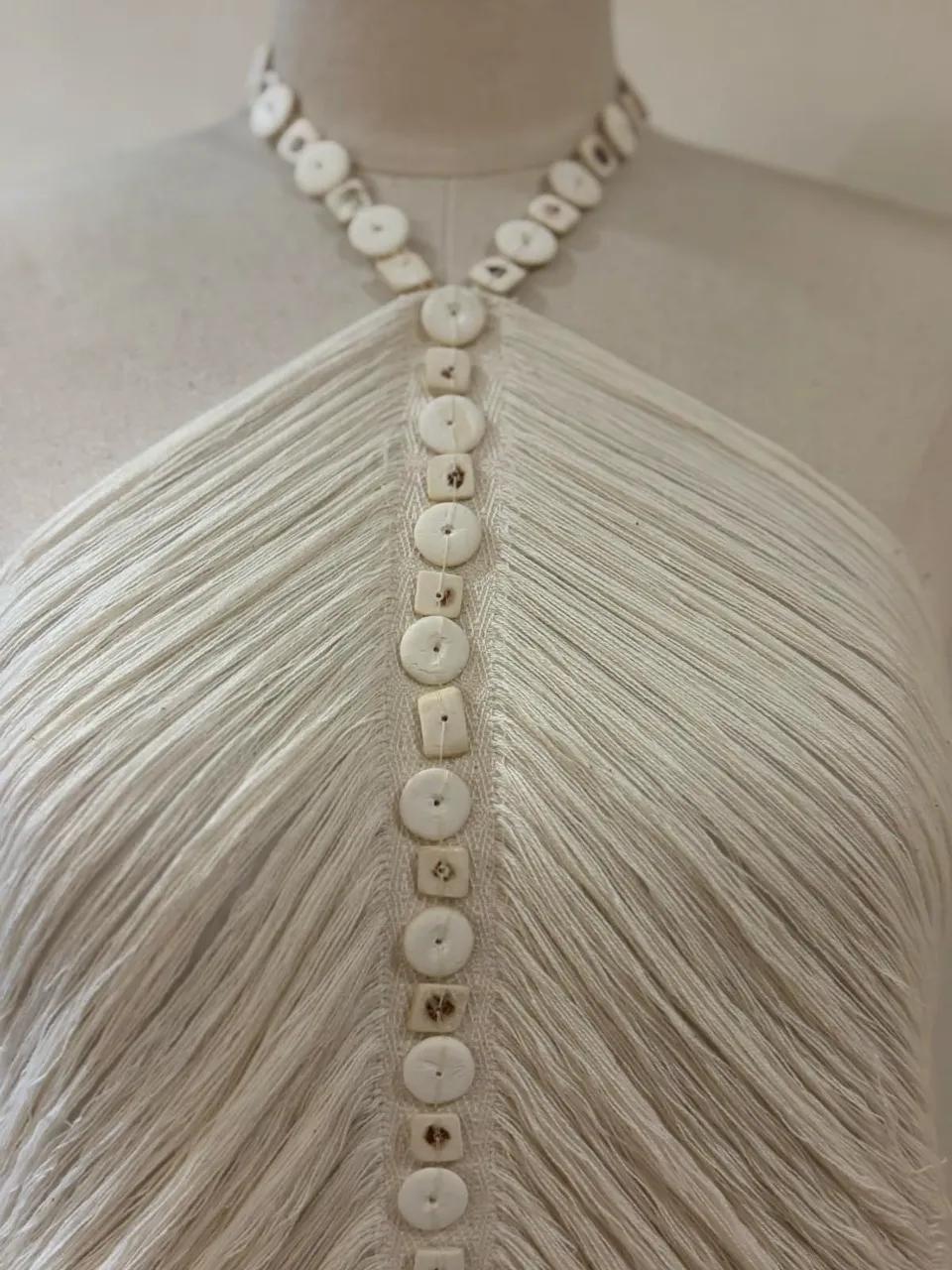
For Jenny, that handwork is exactly what drew her in. “You can feel the hand of the maker in it,” she says. The handwoven material has a certain movement and imperfection that gives it life, while the texture, draping, and coconut-bead details give the dress a sculptural quality without making it feel overworked.
There’s also something important in the way Maison Métisse approached Filipino craft. Jenny loved that the dress didn’t feel like a costume or an overt interpretation of what Filipino design is supposed to look like. It was modern and sensual while remaining firmly rooted in the Philippines.
A Dress That Tells A Story
Jenny has always believed in the depth of Filipino talent and craftsmanship, particularly among artists and artisans whose work deserves a larger audience. With the Maison Métisse dress, that sentiment felt particularly tangible. There was the textile itself, but also the people behind it: the designer who developed the garment, the artisans who worked on its details, and the generations of knowledge represented by the techniques used to make it.
“When something has been woven and made by hand, you become very conscious that you are carrying someone else’s time, skill, knowledge, and heritage with you,” Jenny says.
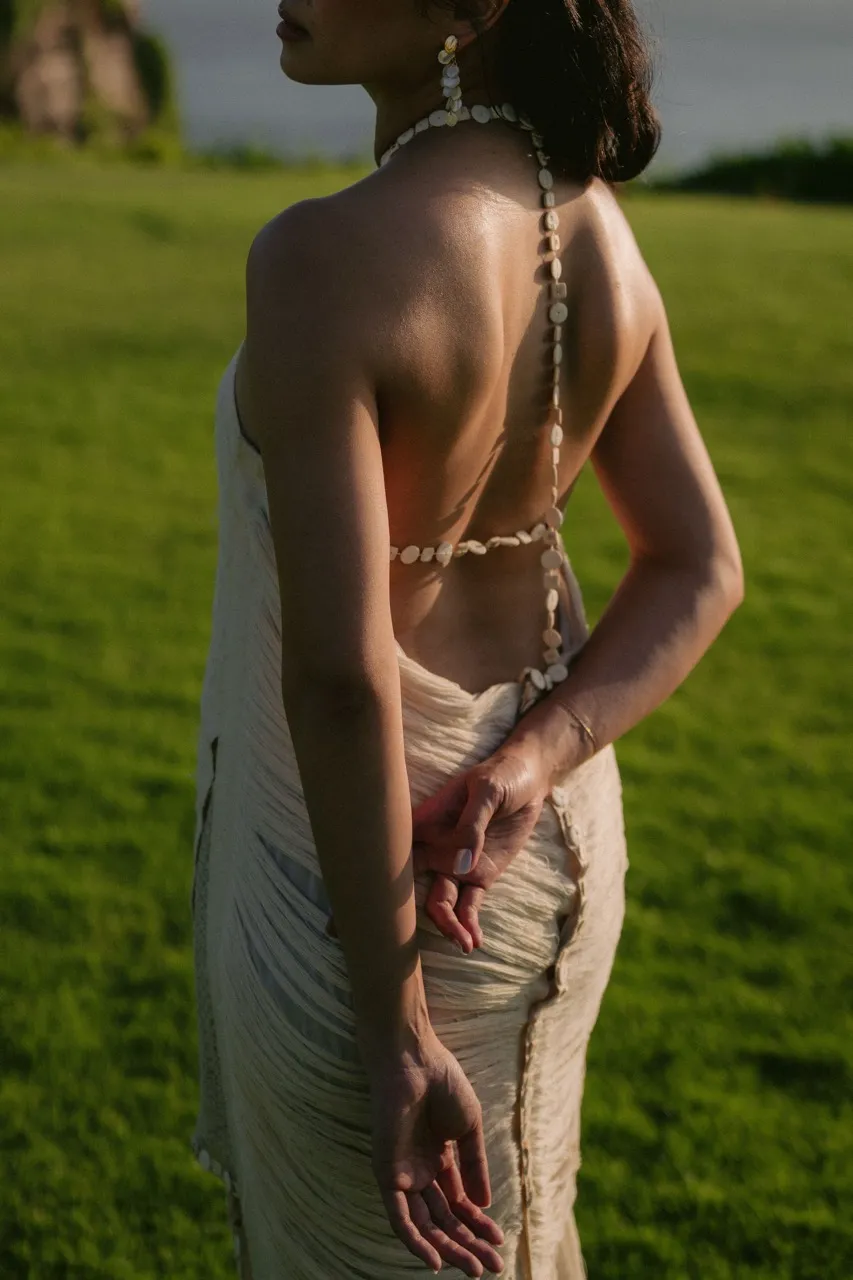

She felt proud, feminine, and emotional wearing the dress that evening. She was celebrating her marriage and donning something connected to her Filipino roots, all in the same moment. That wasn’t the only special detail that made the celebration memorable. She and her husband had also been carrying a little secret: they were expecting their first child, a boy. It made the dress part of two beginnings at once.
Looking back, Jenny remembers feeling completely present. She was surrounded by the people she loved while carrying the baby she and her husband were about to introduce to their family and friends. That’s why she now considers the dress an heirloomHeirloomA valued object, such as jewelry, a watch, furniture, or textile, passed down through generations, carrying sentimental worth. Heirloom-quality pieces are made to last, and buyers increasingly choose timeless craftsmanshipGo to Heirloom Glossary. When she sees it, she recalls the anticipation before their announcement and after the revelation.
“One day, I’ll be able to tell our son, ‘This is what I was wearing the night we told everyone about you,'” she shares.
The dress took almost a year of weaving, handwork, and careful construction, but it was well worth what it would become: a record of time and care. In its Filipino textiles and painstaking details are the hands and knowledge that brought it to life, as well as the memory of a bride celebrating her marriage while carrying another beginning with her.
Photography by Jaja Samaniego, courtesy of Jenny Feliz Sy, unless specified
Frequently Asked Questions
Jenny Feliz Sy wore the Maison Métisse dress to her wedding welcome dinner, where she and her husband announced that they were expecting their first child, a boy. The dress consequently became tied to both their wedding and the beginning of their family.
The dress was designed by Adrienne Charuel, founder and designer of Maison Métisse. Jenny was Charuel’s first bride, and the commission allowed her to bring her Habi-Couture technique into eveningwear and bridalwear.
The dress was woven directly on a loom rather than constructed from pre-woven fabric. It took nearly a year to complete, from the initial idea and toiles through the weaving and final handwork.
The dress was made using 100 percent Philippine cotton and piña, with handmade coconut beads sewn directly onto the garment. Piña side panels from a Lumban artisan were finished with rare sampaguita hand-calado.
Jenny considers the dress an heirloom because it holds the memory of her wedding and the night she and her husband announced their first pregnancy. She says that one day she hopes to tell her son, “This is what I was wearing the night we told everyone about you.”